
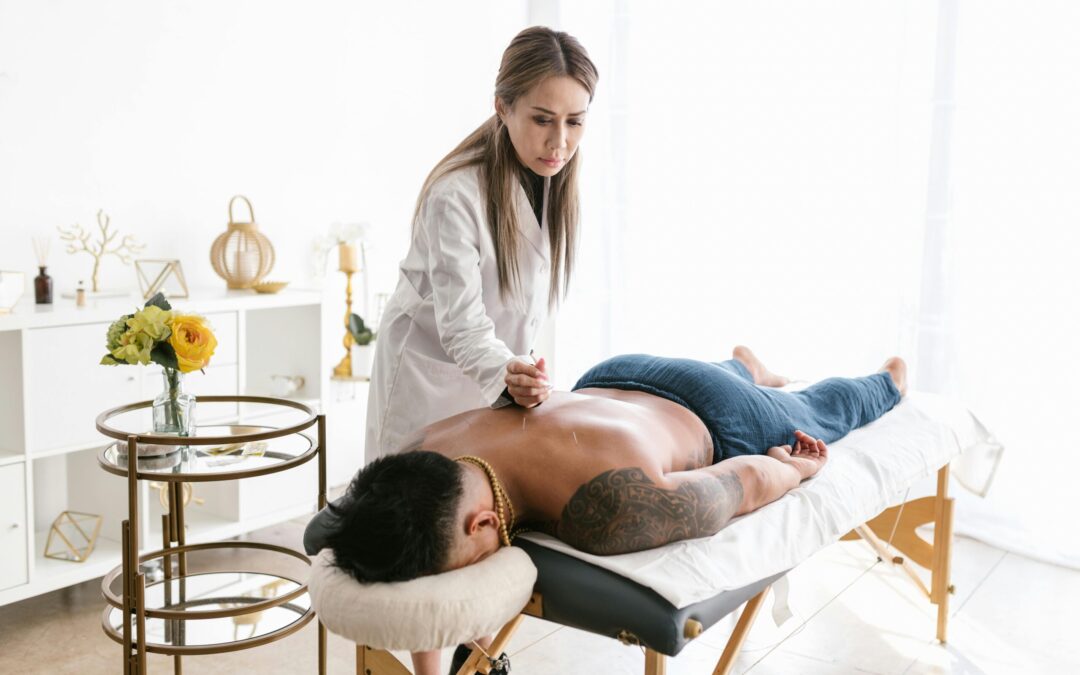
In modern rehabilitation settings, “integration” is no longer a buzzword-it’s a necessity. At True Integration Rehab Wellness, we merge the ancient wisdom of Traditional Chinese Medicine (TCM) with the precision of evidence-based care. Our focus: using Acupuncture not as an isolated modality, but as a key component in a whole-body, whole-person rehabilitation framework.
Why Integration Matters
- TCM views the human body as an interconnected system of energy (Qi), organ networks, emotional states and biomechanical function.
- Conventional rehab emphasises biomechanics, neuromuscular re-education, measurable outcomes and functional restoration.
- When you sync both approaches you treat root causes (such as patterns of imbalance, chronic compensations, and systemic dysregulation) and the symptoms (pain, functional limitation, mobility loss).
- This truly integrated paradigm supports resilience, recovery, and long-term wellness rather than short-term fixes.
Acupuncture Treatment + TCM in a Rehab Context
Acupuncture offers multiple synergistic benefits in a rehab wellness clinic:
- Pain modulation: Needle stimulation can activate endogenous analgesic pathways, reduce inflammation, and ease musculoskeletal tension. For example, a recent meta-analysis found that acupuncture combined with rehabilitation improved motor function and activities of daily living in post-stroke shoulder-hand syndrome patients. (PubMed)
- Systemic regulation: TCM approaches (acupuncture + herbs + lifestyle) aim to restore balance of Qi and Yin/Yang, which may influence autonomic tone, circulation, and healing potential.
- Complement to rehab: Rather than replacing physiotherapy or manual therapy, acupuncture can complement these by reducing blockade (pain, spasm), thus allowing better participation in active rehab.
- Safe adjunct: Large-scale evidence shows acupuncture has a favourable safety profile when performed by qualified practitioners. (JAMA Network)
Latest Evidence & Resources
Here are some of the most up-to-date research findings supporting integration of acupuncture/TCM into rehabilitation:
- A 2025 review: “The state of evidence in acupuncture: A review …” found that among 2 056 patients, acupuncture was more effective than sham and more beneficial than no treatment-though methodological challenges remain. (ScienceDirect)
- A 2024 meta-analysis of ischemic stroke rehabilitation reported that acupuncture plus rehab activated relevant brain functional areas, improved neurological deficits and motor function better than standard care alone. (PLOS)
- Evidence-based review (2017) on acupuncture for musculoskeletal conditions: 96 studies (54 SRs, 42 RCTs), with the conclusion that while there is promising effectiveness and a fairly high safety profile, clarity is limited by heterogeneity and low quality. (ACC)
- Critique of under-use: An article in The BMJ (2022) argued proven beneficial acupuncture therapies are often under-utilised in clinical practice due to evidence translation barriers. (BMJ)
Key takeaway: There is growing evidence for acupuncture + TCM in a rehab-wellness context, especially when integrated with active therapies-but high-quality trials, standardisation and mechanism clarity are still evolving.
FAQs
Q1: What conditions are best suited for acupuncture within a rehab clinic?
A: Patients with chronic pain (neck, back, shoulder), post-operative recovery (orthopaedic surgery), neurological rehab (post-stroke, motor dysfunction), sports rehab, and systemic wellness (stress, sleep, autonomic imbalance) all may benefit when acupuncture is integrated. Evidence for motor rehab (e.g., post‐stroke) is particularly compelling. (PubMed)
Q2: How many sessions are typically required?
A: It depends on the condition, acuity, patient’s constitution and response. Some musculoskeletal protocols may involve 4-8 weekly sessions, then tapering. For neurological rehab, more frequent sessions may be combined with physiotherapy. The evidence base varies. (ACC)
Q3: Is acupuncture safe in a rehab wellness setting?
A: Yes – when performed by licensed, trained practitioners using sterile techniques. Large-scale usage indicates serious adverse events are rare. (JAMA Network)
Q4: Does acupuncture replace physiotherapy/manual therapy?
A: No. The integrated model at True Integration Rehab Wellness uses acupuncture alongside physical rehabilitation, manual therapy, and lifestyle interventions. The goal is synergy, not substitution.
Q5: What distinguishes TCM-based acupuncture from “dry needling”?
A: TCM acupuncture is rooted in the concepts of Qi, meridians, Yin/Yang and holistic diagnosis (tongue, pulse, pattern). Dry needling is a Western anatomical-trigger point-based technique targeting muscle/fascia. While both use needles, their philosophies and approaches differ.
Conclusion
At True Integration Rehab Wellness, we believe the future of rehabilitation is holistic, evidence-informed and integrative. By incorporating acupuncture and TCM into a multidisciplinary rehabilitation framework, we empower patients to recover stronger, move better and sustain wellness.
References
- Hempen M. et al. The state of evidence in acupuncture: A review … ScienceDirect, 2025. (ScienceDirect)
- Shi J. et al. Acupuncture versus rehabilitation for post-stroke shoulder-hand syndrome. PubMed, 2025. (PubMed)
- Zhu T. et al. Efficacy of acupuncture and rehabilitation therapy on brain functional areas (ischemic stroke). PLOS One, 2024. (PLOS)
- Lu L. et al. Evidence on acupuncture therapies is under-used in clinical practice. BMJ, 2022. (BMJ)
- International Centre for Allied Health Evidence. Effectiveness & Safety of Acupuncture Interventions for Musculoskeletal Conditions. 2017. (ACC)