
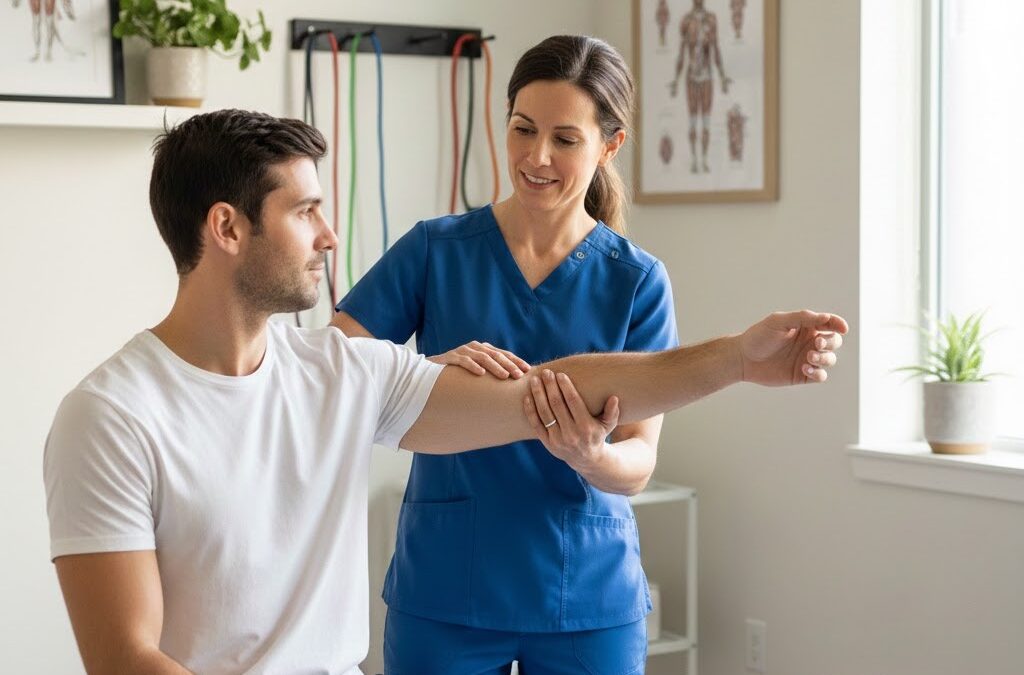
Stretching for weak muscles is a common mistake that often leads to increased instability and recurring pain for both office workers and athletes. Understanding whether a muscle is truly “short” or simply “weak and overstretched” is the first step toward effective functional recovery at our Markham clinic.
Direct Answers
- Should you stretch a weak muscle? Generally, no. Stretching a muscle that is already lengthened and weak can further inhibit its ability to stabilize the joint, often worsening the pain.
- Why do weak muscles feel tight? This is known as “protective tension.” The nervous system stiffens a weak muscle to provide a sense of stability when the muscle lacks the strength to do its job.
- How do office workers fix persistent tightness? By strengthening the overstretched “weak” muscles (like the upper back) and stretching only the truly “short” muscles (like the chest).
- Can stretching weaken an athlete? Yes. Intensive static stretching before performance can temporarily reduce a muscle’s force production and power output.
Tightness" Trap: Weakness vs. Shortening
When a muscle feels “tight,” our instinct is to pull on it. However, at True Integration Rehab & Wellness, our clinical assessments often reveal that this sensation is a sign of muscle inhibition rather than actual shortening.
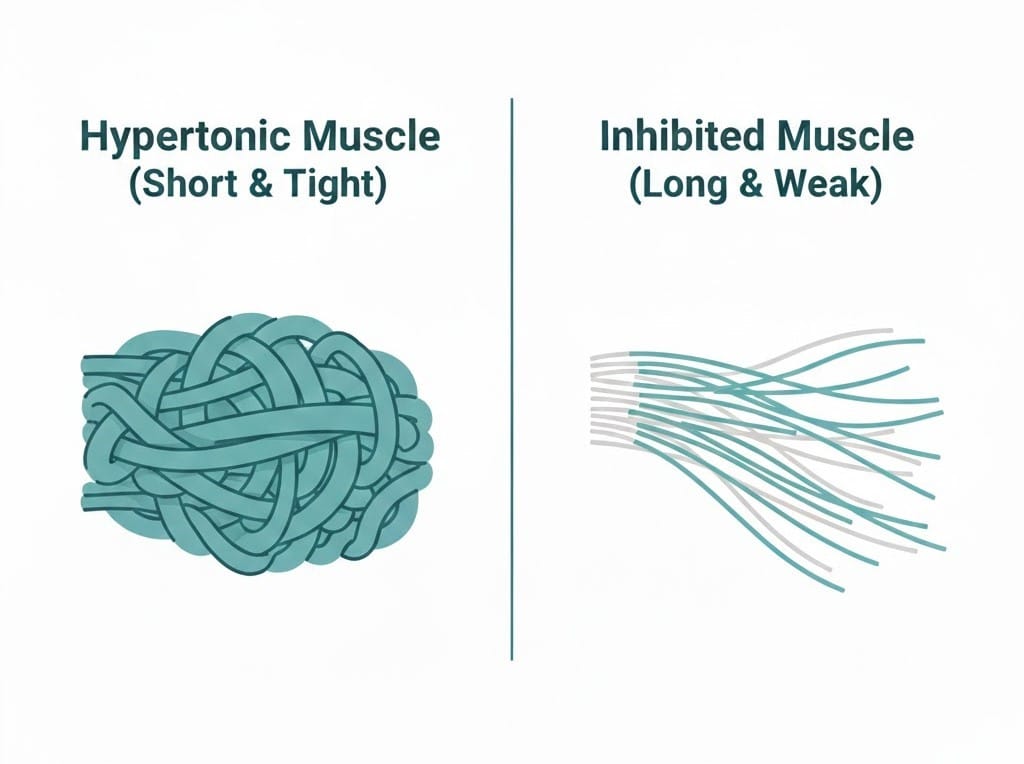
A muscle can be “short and tight” (hypertonic) or “long and weak” (inhibited). If you apply stretching for weak muscles that are already in a lengthened state such as the muscles between the shoulder blades of a computer user you may actually decrease the joint’s stability. For a personalized look at how we identify these imbalances, explore Our Integrated Services.
Why Stretching for Weak Muscles Can Backfire
If a muscle is weak, the brain may create a “sensation” of tightness as a protective mechanism. This is common in the hamstrings and upper traps. Stretching these areas without addressing the underlying weakness can lead to:
- Increased joint laxity: Making you more prone to “tweaking” a joint.
- Decreased force production: Reducing your “pop” or speed in sports.
- The Tension Cycle: Chronic “nagging” pain that returns 20 minutes after you finish stretching.
Clinical research, such as the NASM Guide on Corrective Exercise, highlights that inhibited muscles need activation, not further elongation.
The Office Worker’s Dilemma: Postural Strain
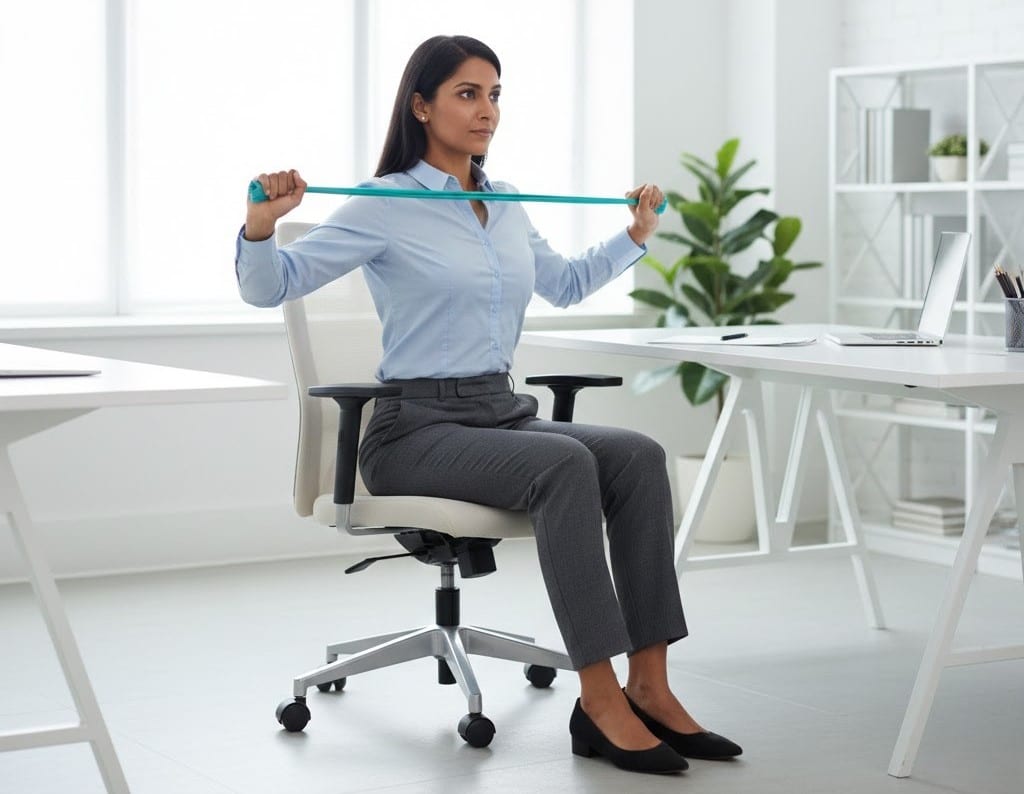
For Markham professionals spending 8+ hours on a laptop, the body often adopts a “C-shape” posture. In this clinical scenario:
- Chest Muscles (Pectorals): These are typically short and tight. They benefit from stretching.
- Upper Back (Rhomboids/Mid-Traps): These are long and weak. They need strengthening, not more stretching.
Focusing on stretching for weak muscles in the back will only allow the shoulders to slump further forward, increasing the load on the neck and spine.
Sports Performance: Mobility with Stability
Athletes often complain of “tight” hamstrings. If those hamstrings are weak, stretching them excessively can lead to strains during explosive movements.
We recommend a “test-retest” approach: if stretching doesn’t improve your range of motion for more than 20 minutes, weakness is likely the culprit. In these cases, switching to eccentric loading (strengthening while the muscle lengthens) is the clinical gold standard.
Who This Is For / Not For
- For: Office workers with chronic neck tension, runners with “tight” hips that won’t release, and people who feel “stiff” despite stretching every day.
Not For: Individuals with acute muscle tears, recent fractures, or diagnosed neurological conditions (like spasticity) without prior clinical clearance.
FAQ
How do I know if a muscle is weak or tight?
A clinical assessment using manual muscle testing is the most accurate method. If a muscle feels tight but has a full range of motion, it is likely weak.
Can a muscle be both weak and tight?
Yes. In sedentary populations, a muscle can be “shortened” due to position but lack the functional strength to move a load, making it vulnerable to injury.
What should I do instead of stretching?
Focus on isometric holds (holding a position under tension) or slow eccentric exercises to build stability and “re-map” the nervous system.
Why does my neck feel tight after stretching?
You may be stretching the upper traps, which are often trying to hold your head up because the deeper neck flexors are weak. You are essentially stretching your “lifelines.”
Is yoga good for weak muscles?
Yoga can be excellent, provided the focus is on active engagement (muscle hugging the bone) rather than passive “hanging” in the joints. For general safety tips, see the Mayo Clinic Guide on Stretching.
Ready to stop guessing and start healing? Book a Clinical Assessment at True Integration Rehab & Wellness in Markham today. Let’s identify your true mobility needs and get you back to moving without the “tightness” trap.