
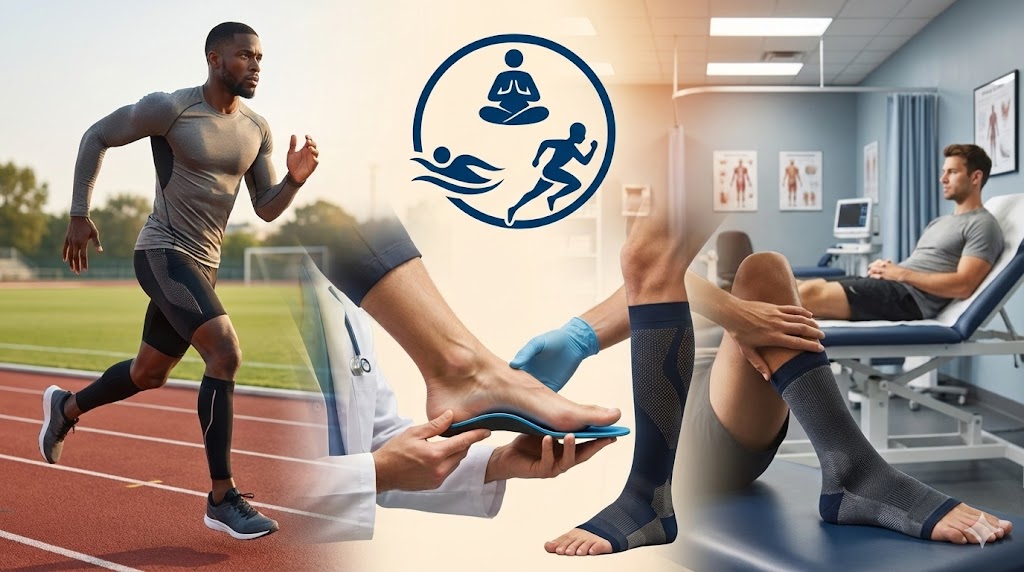
Pain Point: Persistent heel pain, swelling, lower-limb fatigue, or slow recovery limiting daily movement or athletic performance.
Desired Outcome: To walk, train, and recover with confidence — without relying only on passive or generic devices.
Audience Persona: Active adults, athletes, runners, swimmers, weekend warriors, and individuals managing chronic foot or lower-limb symptoms.
Key Insight: Orthotics and compression garments can meaningfully reduce pain and swelling, but only when fitted precisely and integrated into a full assessment-led rehab plan.
Practical Benefit: When used correctly, these tools help redistribute load, support soft tissue healing, improve circulation, and accelerate return to activity.
Introduction: Recovery Is Never One-Dimensional
Lower-limb and foot conditions rarely improve from a single intervention. Whether the challenge is plantar heel pain, collapsed arches, Achilles irritation, venous swelling, or post-training fatigue, the most effective recovery plans combine:
- Hands-on soft tissue therapy
- Precision movement assessment
- Corrective exercise + load management
- Wearable supports (orthotics or compression)
- Footwear guidance
- Personalized follow-up
At TIRW, we integrate these elements to help patients move better, faster. Two tools that consistently support recovery — when clinically indicated and fitted properly — are custom orthotics and graduated compression garments.
1. What Are Custom Orthotics and How Do They Help?
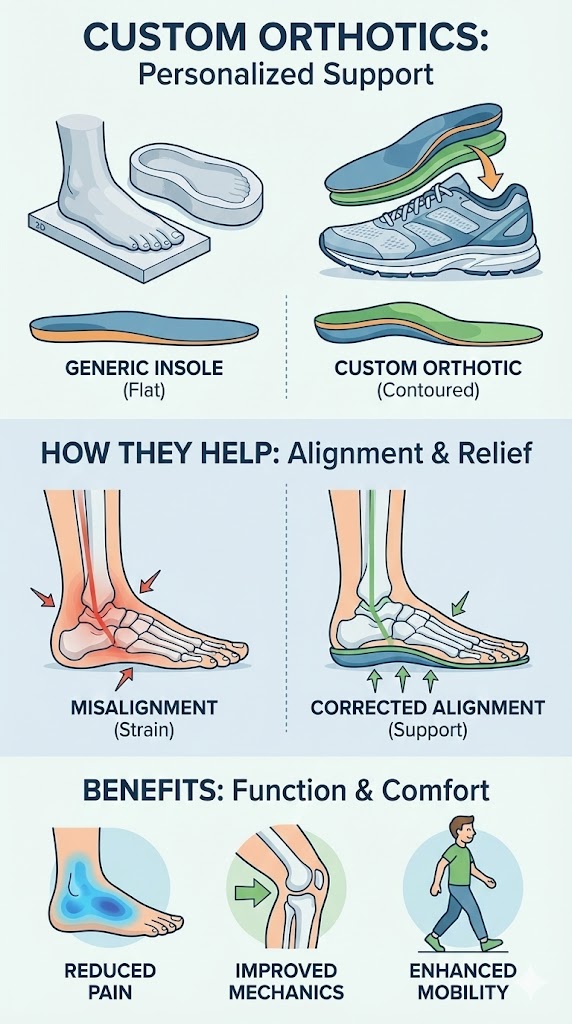
Custom orthotics are individualized insoles created from a 3D scan, cast, or pressure-map of your feet. They are designed to:
- Redistribute plantar pressure
- Reduce stress on the plantar fascia and heel
- Support the arch and midfoot
- Improve alignment during walking and running
- Reduce excessive pronation or supination
- Decrease load on irritated soft tissues
Key clinical point:
High-quality research shows orthotics can reduce plantar heel pain, but they work best when combined with exercise, gait training, and individualized rehab, not as a stand-alone fix.
At TIRW, custom orthotics are recommended only after a full biomechanical assessment, including hip/knee mechanics, movement patterns, and footwear analysis. This ensures the device supports your specific load distribution, not a generic template.
2. What Are Graduated Compression Garments?
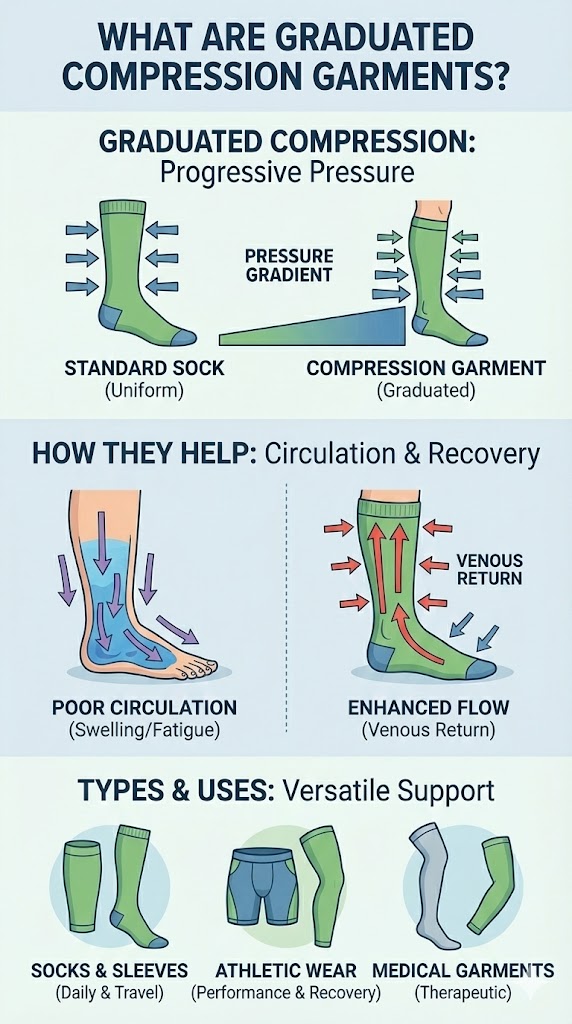
Graduated compression applies higher pressure at the ankle and gradually less pressure up the limb. This enhances:
- Venous return
- Circulation
- Control of swelling and edema
- Soft tissue recovery
- Reduction of post-exercise soreness
Meta-analyses in athletic recovery show that compression garments may:
- Reduce the perception of muscle soreness
- Improve recovery of strength over 24–72 hours
- Support recovery after long endurance sessions (runs, swims, cycling)
- Assist with swelling control after injury or surgery
- Offer symptomatic relief for venous insufficiency
When used correctly, with proper sizing, pressure rating, and timing, compression can be a valuable adjunct to both injury rehab and sports performance recovery.
Curious how compression fits into your recovery?
Explore our Soft Tissue Therapy for Athletes blog.
3. Evidence-Based Clinical Benefits
Pain Reduction for Plantar Heel Pain
Orthotics (custom or high-quality prefabricated) can meaningfully reduce heel pain when combined with:
- Soft tissue therapy
- Calf + plantar intrinsic strengthening
- Load management
- Footwear education
Faster Post-Exercise Recovery
Compression can help preserve strength and reduce soreness in the hours to days after intense training, especially useful for:
- Runners increasing mileage
- Swimmers performing double sessions
- Pickleball or racquet-sport athletes
- Ironman and long-distance endurance athletes
Edema Control & Circulatory Support
Compression is clinically recommended for:
- Lower-limb swelling
- Post-operative edema
- Lymphatic and venous concerns
- Prolonged sitting or standing
This is particularly helpful for individuals who spend long clinic or office hours on their feet.
4. How TIRW Uses Orthotics & Compression, the Right Way
1. Assessment First, Never Guess
Devices are only recommended when biomechanical factors justify them.
Your assessment includes:
- Gait and posture analysis
- Hip, knee, and foot mechanics
- Running or sport-specific context (if applicable)
- Footwear inspection
- Soft tissue assessment of calf, plantar fascia, tibialis posterior, etc.
Orthotics and compression are prescribed tools, not default solutions.
2. Paired with Active Rehab, Always
We integrate devices with:
- Strength work for foot intrinsics, calves, and hips
- Mobility + motor control exercises
- Soft tissue therapy (myofascial, mobilizations, ART-style work)
- Load progression for walking or running
- Footwear modifications
Devices support the tissue, you drive the recovery.
3. Fit & Follow-Up Matter
For orthotics:
- Proper break-in schedule
- Footwear compatibility check
- Adjustments as you adapt
For compression:
- Size based on limb circumference, not guessing
- Fitted pressure levels (mild, moderate, medical-grade)
- Guidance for post-exercise vs daily wear
4. Setting Realistic Expectations
Orthotics and compression:
- Provide incremental, not instant changes
- Work best when paired with rehab
- Are not injury-prevention guarantees
- Support long-term success through load modification
Patients often notice improvements within weeks but full adaptation takes time.
FAQ: Your Top Questions Answered
Do I need custom orthotics or will prefabricated insoles help?
Many people benefit from high-quality prefabricated insoles for mild symptoms.
Custom orthotics are best when symptoms persist, biomechanics are more complex, or athletic load is high.
How long should I wear compression after exercise?
Most benefits occur in the first 24–72 hours post-exercise.
Immediate post-training wear helps recovery.
Can orthotics prevent injury?
Not fully. They redistribute load and reduce stress, but strength, technique, and conditioning are still essential.
Are there risks?
Low.
- Orthotics: discomfort if poorly fitted
- Compression: avoid in arterial insufficiency without clearance
Takeaway
Custom orthotics and compression garments are low-risk, evidence-informed tools that help reduce pain, control swelling, and support soft tissue recovery. But at TIRW, these tools are never used in isolation. When paired with soft tissue therapy, functional rehab, movement coaching, and personalized assessment, they become powerful supports for long-term healing.
Conclusion
Recovery is not about quick fixes, it’s about precision, personalization, and integration. At TIRW, we combine movement assessment, soft tissue chiropractic care, registered massage therapy, corrective exercise, and selective device fitting to help you move better, recover faster, and return to the activities that matter most.
Whether you are managing chronic heel pain, lower-limb swelling, or recovering from long training blocks, custom orthotics and compression garments can provide the structural and circulatory support your body needs, from the ground up.
Call to Action
Ready to optimize your recovery with assessment-led support?
Book your TIRW precision gait and movement analysis
We’ll determine whether orthotics or compression are appropriate and pair them with a personalized rehab plan.
Stay connected for clinical tips & wellness insights
Follow us on Instagram: https://instagram.com/trueintegrationwellness
Follow us on Facebook: https://facebook.com/trueintegrationwellness
Reference List
You can insert these at the bottom of your blog or behind a “Research Sources” toggle.
Orthotics & Plantar Heel Pain
- Landorf KB, Keenan A-M, Herbert RD. Effectiveness of foot orthoses to treat plantar fasciitis: a randomized trial. Arch Intern Med.
- Whittaker GA et al. Foot orthoses for plantar heel pain: systematic review and meta-analysis. Br J Sports Med.
Compression Garments
3. Hill J et al. Compression garments and recovery from exercise-induced muscle damage: a meta-analysis. Sports Med.
4. Born D-P et al. Effects of compression on performance and recovery in sports: meta-analysis. Int J Sports Physiol Perform.
Edema & Venous Return
5. Partsch H. Compression therapy for chronic venous insufficiency.
6. Mosti G. Graduated compression stockings in venous/lymphatic disorders.