
Executive Summary
Single-modality treatments often prolong injury recovery timelines by addressing symptoms in isolation. Integrated therapy synchronizes chiropractic care, massage therapy, and active rehabilitation into a unified recovery system. This post outlines how True Integration Wellness eliminates recovery bottlenecks, prevents recurrent injuries, and restores optimal physical function through integrated therapy physical recovery.
Purpose and Scope
To educate patients recovering from acute injuries, chronic pain, or athletic strain on the measurable benefits of a coordinated care model at True Integration Wellness, while driving high-intent organic traffic through high-density VSO/SEO structure.
Table of Contents
Introduction
When dealing with persistent joint pain, acute muscle strain, or post-surgical rehabilitation, picking a single treatment modality often feels like trying to solve a complex puzzle with only one piece. Traditional healthcare models frequently isolate treatments, you see a chiropractor for joint alignment, a massage therapist for muscle tightness, and a physiotherapist for exercise rehabilitation often with zero communication between providers.
At True Integration Wellness, recovery is approached differently. Integrated therapy physical recovery relies on a synchronized system where modalities work concurrently. By aligning structural integrity, soft tissue health, and functional movement patterns simultaneously, patients achieve faster, more durable recovery outcomes.
The Bottlenecks of Single-Modality Care
Focusing on a single line of treatment can create friction in your body’s natural healing timeline:
- Soft Tissue Tension: Adjusting a joint without addressing surrounding muscle tightness causes the joint to pull back out of alignment quickly.
- Structural Misalignment: Massaging inflamed muscle tissue without correcting underlying biomechanical dysfunction yields only temporary relief.
- Functional Weakness: Relieving pain without retraining movement patterns leaves the body vulnerable to re-injury.
When care is fragmented, recovery stalls. An integrated strategy removes these bottlenecks by delivering the right care in the correct sequence.
What Is Integrated Therapy?
Integrated therapy is a coordinated clinical model that combines distinct therapeutic practices into a customized treatment program. Rather than treating symptoms in isolation, an integrated therapy physical recovery program evaluates how your neuromuscular, musculoskeletal, and circulatory systems interact.
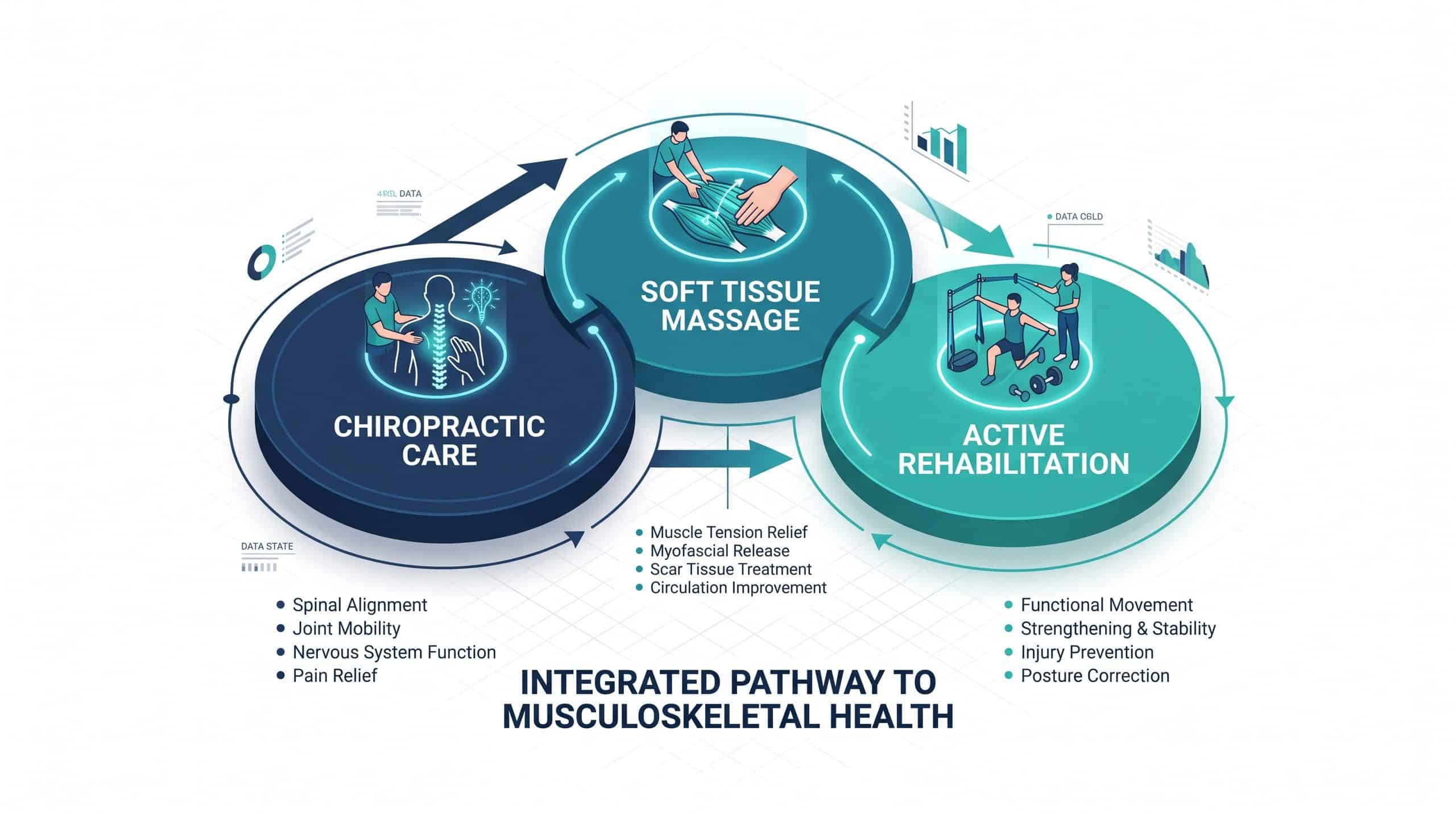
Core Components of the Integrated Model:
- Chiropractic Adjustments: Restores joint mobility, relieves nerve compression, and improves alignment.
- Massage Therapy: Reduces muscle tension, breaks down scar tissue, and promotes local blood flow for tissue repair.
- Active Rehabilitation & Physiotherapy: Strengthens stabilizing muscles, restores range of motion, and corrects faulty movement patterns.
- Dry Needling / Acupuncture: Stimulates stubborn trigger points and speeds up neuromuscular reset.
- Active Mobility Exercises: Restores functional range of motion and stabilizes dynamic movement.
How Integrated Therapy Physical Recovery Speeds Up Healing?
1. Synchronized Soft-Tissue and Joint Care
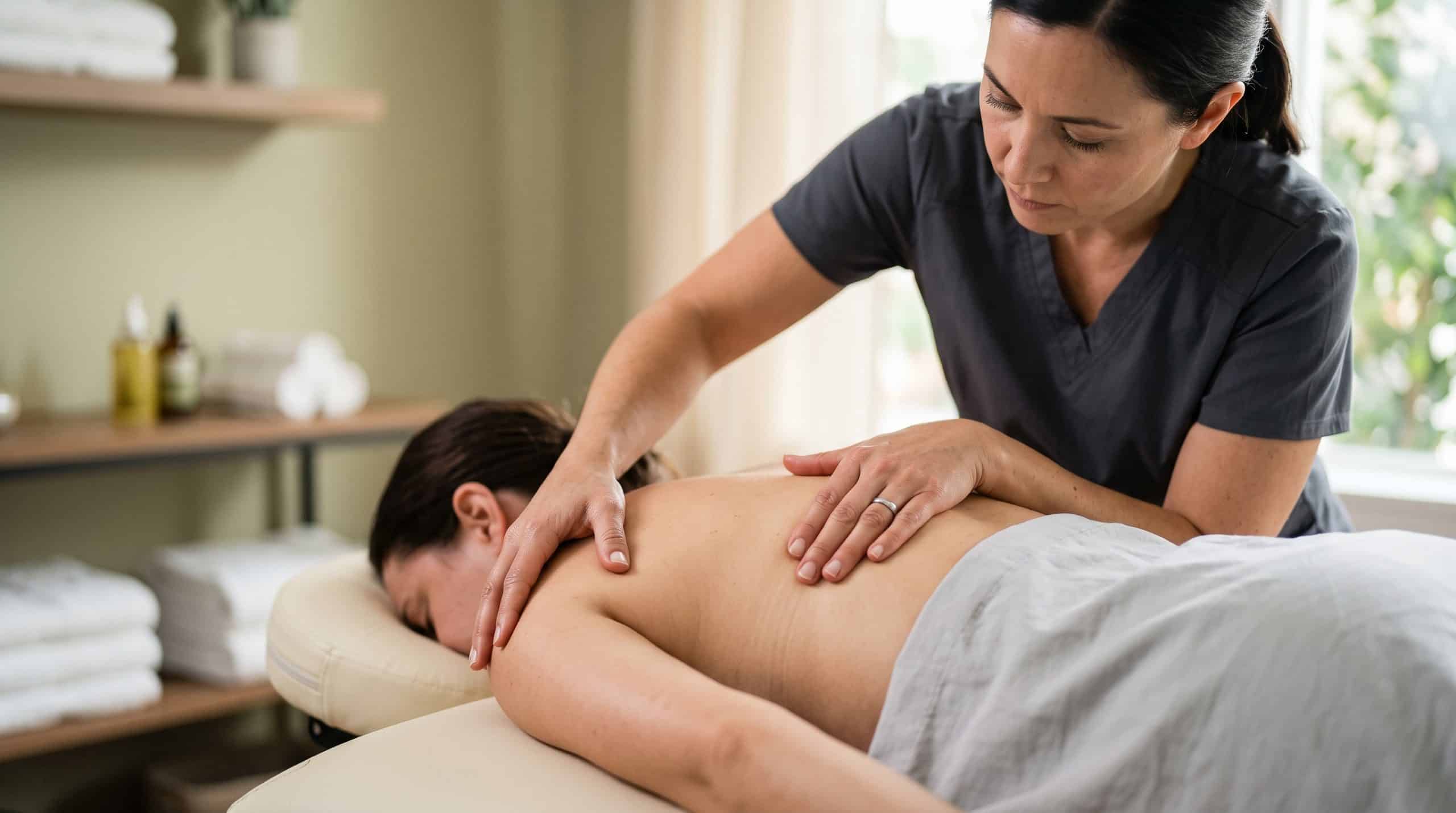
When muscle tension and joint stiffness are addressed in the same care cycle, treatments reinforce each other. Muscle relaxation allows for easier joint adjustments, while proper alignment reduces chronic muscle strain.
2. Targeted Reduction of Inflammation
Active recovery strategies combined with manual therapies accelerate lymphatic drainage and venous return. This systemic clearance of metabolic waste minimizes localized swelling and reduces downtime between rehabilitation sessions.
3. Long-Term Biomechanical Correction
Pain alters how you move. Integrated care identifies compensation patterns early, retraining your nervous system to move efficiently before temporary compensations turn into chronic injury patterns.
What to Expect During Your Recovery Plan at True Integration Wellness?
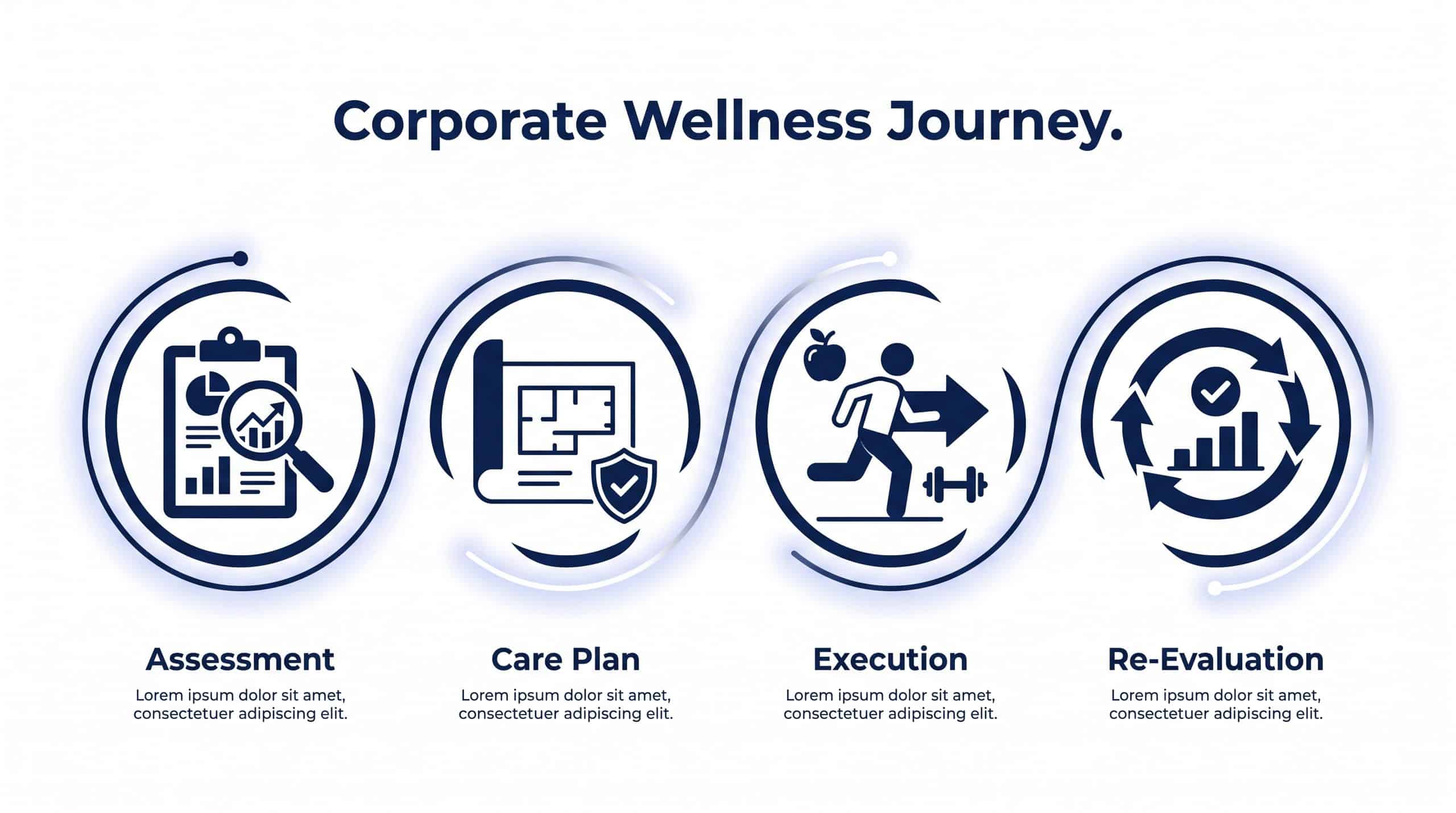
Your path to integrated therapy physical recovery follows an established methodology designed to move you from acute relief to long-term performance:
- Comprehensive Assessment: Full evaluation of movement mechanics, posture, joint restriction, and tissue health.
- Collaborative Care Plan: A customized roadmap outlining the exact sequence of chiropractic, massage, and active rehab sessions required.
- Progressive Execution: Systematic treatment phases that transition from pain reduction to functional restoration and performance maintenance.
- Re-Evaluation Metrics: Ongoing measurement of mobility, strength, and pain scores to ensure recovery remains on target.
Conclusion
Speeding up recovery isn’t about rushing the body’s natural healing processes, it’s about removing the obstacles that slow them down. By combining structural alignment, soft-tissue therapy, and active movement retraining into one cohesive strategy, True Integration Wellness helps you overcome pain faster and stay active longer.
FAQs
- How does integrated therapy differ from seeing multiple specialists separately?
When you see specialists separately, treatments are often disconnected and uncoordinated. Integrated therapy brings practitioners together under one unified plan, ensuring chiropractic care, massage therapy, and physiotherapy complement each other rather than working at cross-purposes. - Is integrated therapy covered by private health insurance?
Yes. Most extended health insurance plans cover individual disciplines like chiropractic care, massage therapy, and physiotherapy. At True Integration Wellness, treatments are billed under their respective professional disciplines, allowing you to maximize your existing insurance coverage. - How quickly can I expect results from an integrated treatment plan?
While individual timelines vary based on injury severity, patients undergoing integrated therapy typically experience noticeable pain reduction and improved mobility faster than those using a single modality, as soft-tissue and joint restrictions are resolved simultaneously. - Can I receive chiropractic adjustments and massage therapy on the same day?
Yes. In fact, receiving massage therapy before a chiropractic adjustment relaxes tight muscles and reduces tissue resistance, making the joint adjustment smoother, gentler, and more effective. - Is integrated therapy suitable for chronic, long-term pain?
Absolutely. Chronic pain usually involves multiple systems, nervous, muscular, and skeletal. Integrated therapy addresses all three layers concurrently to break persistent pain cycles and correct long-standing movement compensations. - Do I need a doctor’s referral to start integrated therapy at True Integration Wellness?
No referral is necessary to begin care. However, if you plan to claim treatments through certain private insurance policies or workers’ compensation, your insurer may require a physician’s referral for reimbursement. - What should I wear to my integrated therapy appointments?
Wear comfortable, loose-fitting athletic clothing that allows full freedom of movement. This enables your care team to easily perform biomechanical assessments, soft-tissue work, and active rehabilitation exercises.
Call to Action
Ready to eliminate recovery bottlenecks and rebuild your physical resilience?
Schedule Your Integrated Care Assessment at True Integration Wellness Today
Reference Links
Internal Links
- Chiropractic care, massage therapy, and active rehabilitation: https://trueintegrationwellness.ca/services/
- True Integration Wellness: https://trueintegrationwellness.ca/
- Chiropractic Adjustments: https://trueintegrationwellness.ca/spinal-decompression/
- Massage Therapy: https://trueintegrationwellness.ca/massage-theraphy/
- Active Rehabilitation & Physiotherapy: https://trueintegrationwellness.ca/physical-rehab/
- Dry Needling / Acupuncture: https://trueintegrationwellness.ca/acupuncture-tcm/
- Schedule Your Integrated Care Assessment: https://trueintegrationwellness.ca/booking/
External Links
- Traditional healthcare models: https://www.who.int/health-topics/traditional-complementary-and-integrative-medicine#tab=tab_1
- Integrated therapy physical recovery: https://osher.ucsf.edu/treatment-areas/integrative-physical-therapy
- Biomechanical dysfunction: https://www.physio.co.uk/what-we-treat/musculoskeletal/symptoms/biomechanical-problems.php