
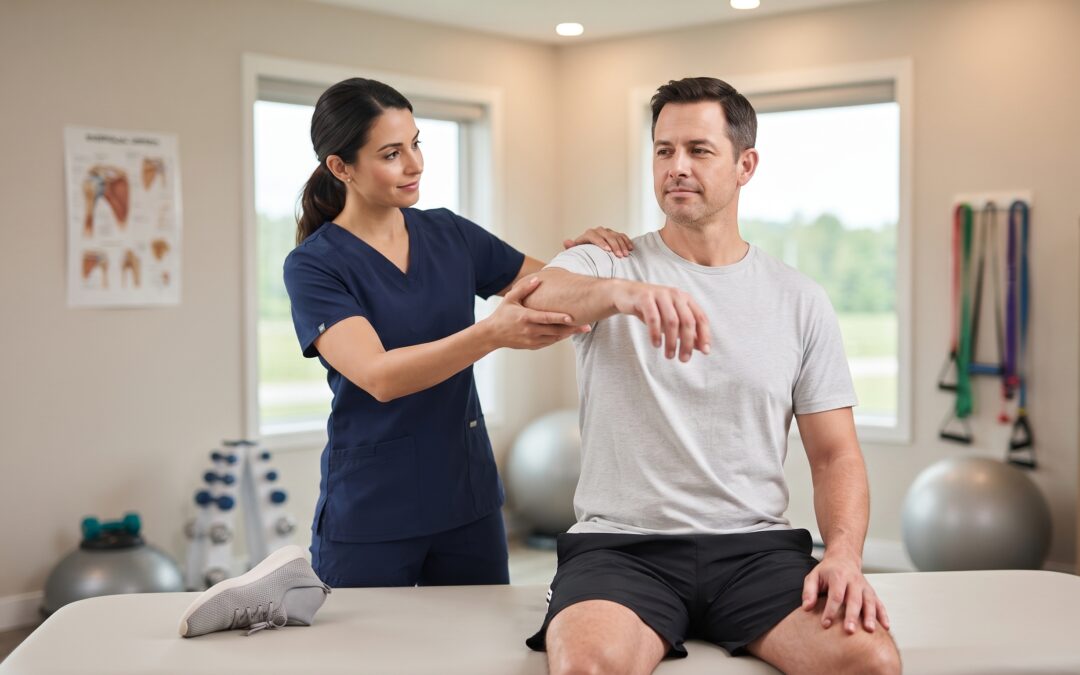
Pain that starts in one place can change the way you move everywhere else. A sore shoulder may make you lift differently. An irritated knee may change your stride. Heel pain can make you shift your weight to the other foot.
When a tendon becomes irritated or overloaded, everyday activities can become uncomfortable. Understanding the affected tendon, the demands placed on it, and the way your body compensates can help you make informed decisions about recovery.
At True Integration Rehabilitation & Wellness Clinic in Markham, Ontario, physical rehabilitation takes a personalized approach to movement, soft tissues, joint function, and recovery goals.
Executive Summary
Tendonitis, also spelled tendinitis, refers to irritation and inflammation of a tendon, the strong connective tissue that attaches muscle to bone. It often develops after repetitive movements, sudden increases in activity, or an injury.
Common symptoms include localized pain, tenderness, stiffness, swelling, and discomfort during movement. The shoulder, elbow, wrist, hip, knee, and Achilles tendon near the heel are frequently affected.
Management typically begins with modifying painful activities and gradually returning to appropriate movement. Depending on the diagnosis, rehabilitation may include targeted strengthening, mobility work, activity adjustments, and hands-on care.
The key principle is to address the affected tendon while considering the movement patterns and physical demands that may be contributing to the problem.
Purpose and Scope
This article explains what tendonitis is, why it develops, how symptoms differ by body region, and which management approaches may support recovery.
It is intended for adults, active individuals, recreational athletes, and people whose work involves repetitive movements. It provides general education, not an individual diagnosis or treatment prescription.
What Is Tendonitis?
Tendons connect muscles to bones and help transfer muscular force into movement. They play an essential role when you reach overhead, grip an object, climb stairs, run, or push off the ground.
Tendonitis can develop when a tendon is irritated following repetitive loading or an injury. However, not every painful tendon is actively inflamed. Tendinopathy is a broader term covering tendon problems, including tendinitis and longer-term tendon changes sometimes described as tendinosis.
This distinction matters because the right management depends on the underlying condition, not simply the location of the pain.
For example, shoulder pain during overhead movement may involve a rotator cuff tendon, but other shoulder conditions can produce similar symptoms. An appropriate assessment helps distinguish between possible causes.
What Causes Tendonitis?
Tendons respond to the physical demands placed on them. Problems may develop when those demands exceed the tissue’s current capacity to tolerate and recover from the load.
Common contributing factors include:
- Repetitive movements: Frequent typing, gripping, lifting, throwing, painting, or other repeated actions.
- Sudden increases in activity: Increasing running distance, lifting weights, or training intensity too quickly.
- Insufficient recovery: Repeating demanding activities without adequate time to adapt.
- Movement technique: Repeatedly performing a task in a way that places excessive stress on a tendon.
- Age and health factors: Tendon vulnerability may increase with age, while certain medical conditions and medications can also affect tendon health.
Equipment, footwear, work demands, and previous injuries may influence how loads are distributed across the body.
Importantly, tendon pain does not automatically mean that your posture is poor or that one joint is out of alignment. Several factors can contribute, and the relevant ones differ from person to person.
Tendonitis Signs by Body Region
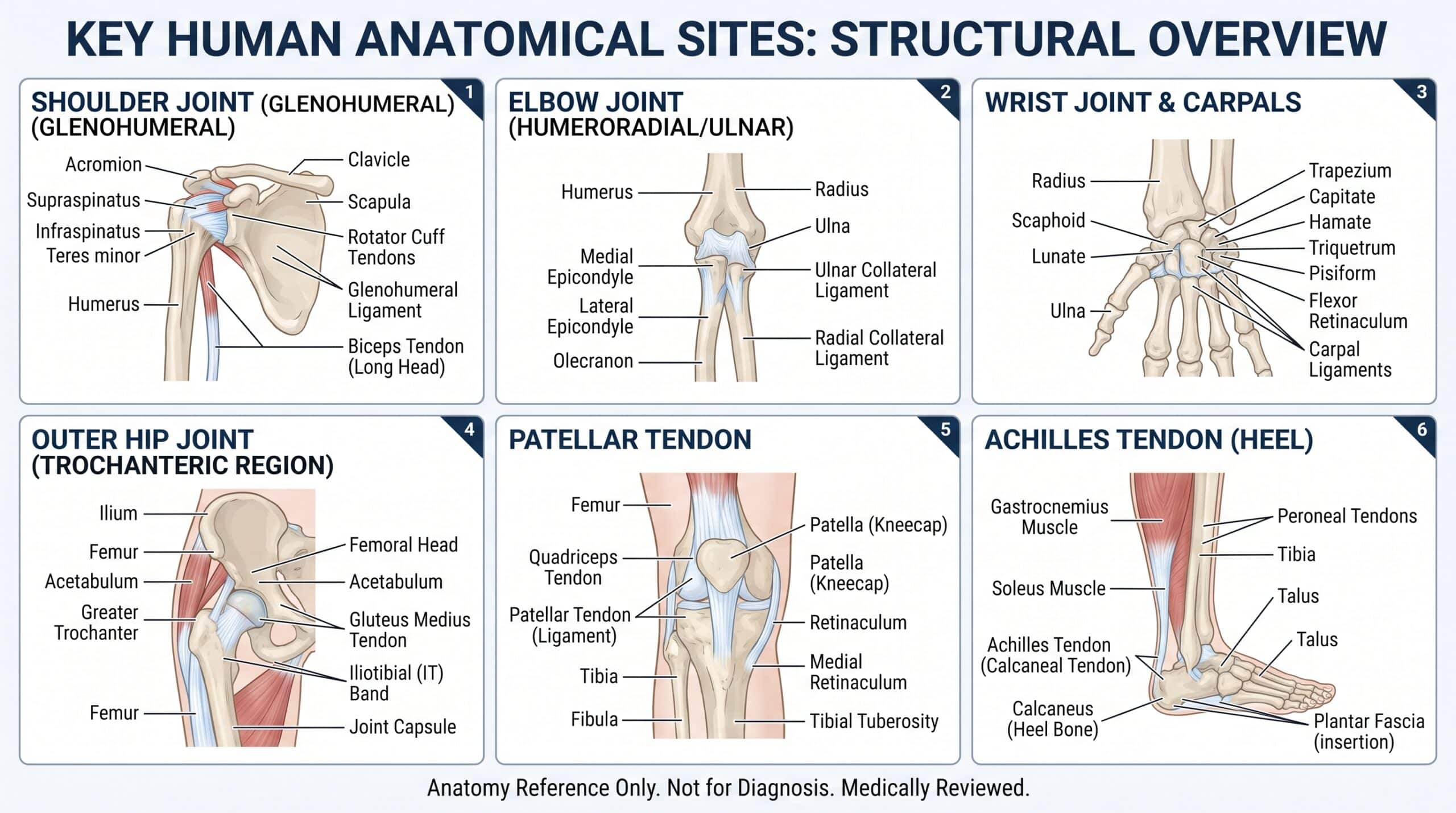
Tendon symptoms vary depending on which structure is affected and how it is used. Recognizing the location and pattern of pain can help you decide when an assessment is appropriate.
1. Shoulder: Pain When Reaching or Lifting
Shoulder tendon problems may involve the rotator cuff or biceps tendon.
Possible signs include:
- Pain when reaching overhead or lifting an object.
- Discomfort when reaching behind your back.
- Tenderness around the shoulder.
- Pain that interferes with sleep, especially when lying on the affected side.
Repeated overhead work, throwing, and certain gym exercises can increase tendon loading. Shoulder stiffness or weakness may also change how you reach, lift, or carry objects.
2. Elbow: Pain With Gripping or Repetitive Work

Tendon problems around the elbow commonly include tennis elbow and golfer’s elbow.
Tennis elbow usually causes pain around the outer elbow, while golfer’s elbow typically affects the inner elbow.
Symptoms may include:
- Discomfort when gripping or lifting.
- Pain during wrist movements.
- Tenderness around the affected side of the elbow.
- Reduced tolerance for repetitive work or sport.
These conditions can affect people who type, use tools, cook, play racket sports, or perform other repetitive hand and arm tasks.
3. Wrist and Thumb: Pain During Everyday Hand Movements
Tendon irritation around the wrist or thumb may develop with repeated gripping, twisting, lifting, or phone use.
Possible symptoms include pain when opening a jar, carrying a bag, turning a handle, or moving the thumb.
Not all wrist pain is tendonitis. Nerve irritation, joint problems, and other conditions may cause similar symptoms, particularly if numbness or tingling is present.
4. Hip: Pain During Walking, Stairs, or Side-Lying
Hip tendon problems may affect the tendons around the outer hip or those connecting the hamstring muscles near the sitting bone.
Depending on the tendon involved, symptoms may include:
- Pain over the outer hip.
- Discomfort when climbing stairs or walking uphill.
- Pain when lying on the affected side.
- Discomfort during prolonged sitting, running, or acceleration.
Hip pain can change walking mechanics. A person may shorten their stride, lean differently, or place more weight on the opposite leg.
5. Knee: Pain During Stairs, Running, or Jumping
Patellar tendon problems commonly cause pain below the kneecap, especially during jumping, landing, or other demanding knee movements.
Symptoms can include localized tenderness, pain during activity, and reduced tolerance for stairs or exercise.
Other knee conditions can produce similar symptoms, so pain around the kneecap should not automatically be labelled tendonitis.
6. Achilles Tendon and Heel: Pain During Walking or Running
The Achilles tendon connects the calf muscles to the heel bone. Irritation or other tendon changes can cause pain at the back of the heel or along the tendon.
Common symptoms include:
- Morning stiffness around the Achilles tendon.
- Pain during walking, running, or climbing stairs.
- Tenderness or thickening along the tendon.
- Discomfort when pushing off the foot.
A sudden pop, severe pain, or difficulty pushing off the foot may indicate a tendon rupture and requires urgent medical assessment.
How Body Compensation Can Affect Recovery
Your body constantly adapts movement to complete everyday tasks. When a tendon hurts, you may unconsciously alter the way you move to reduce discomfort.
For example:
- Shoulder pain: You may change how you lift your arm or rotate your trunk to reach overhead.
- Elbow pain: You may grip objects differently or use your shoulder more during lifting.
- Hip pain: You may shorten your stride or shift weight to the opposite leg.
- Knee pain: You may alter your walking pattern or avoid loading the affected side.
- Achilles pain: You may change how you push off the foot or place weight through the legs.
These changes are not necessarily harmful in the short term. They can be useful ways of protecting a painful area. However, prolonged compensation may increase demands on other tissues or make normal movement more difficult.
This is why rehabilitation should consider more than the painful spot. A clinician may examine the affected tendon, joint movement, muscle strength, activity demands, and relevant movement patterns.
The goal is not to assume that the whole body is imbalanced. It is to identify which factors are actually contributing to the person’s symptoms and recovery.
Tendonitis Management and Rehabilitation
There is no single treatment that suits every tendon problem. Management depends on the affected region, severity, duration, health history, and clinical findings.
1. Modify Activities That Trigger Pain
Temporarily reduce activities that clearly aggravate symptoms. This may mean adjusting training volume, reducing repetitive gripping, changing lifting tasks, or taking breaks during prolonged work.
Complete inactivity is not always necessary. The aim is to avoid excessive irritation while maintaining safe, appropriate movement.
2. Use Cold Therapy When Appropriate
For a recent, painful flare-up, a cold pack wrapped in a towel may provide temporary symptom relief. Apply it for up to 15-20 minutes, protecting the skin and stopping if the area becomes excessively uncomfortable.
Cold therapy may help manage discomfort, but it does not establish the diagnosis or resolve every underlying tendon problem.
3. Progress Strengthening Gradually
Once the condition has been assessed, a rehabilitation program may include exercises designed to restore strength, movement tolerance, and function.
Depending on the tendon involved, a clinician may recommend controlled resistance exercises, progressive loading, or region-specific mobility work.
The amount of load and the speed of progression matter. Exercises that are suitable for one tendon condition may be inappropriate for another, especially after a sudden injury.
4. Consider the Whole Movement Pattern
A comprehensive assessment may examine how neighbouring joints and muscle groups contribute to a task.
For example, a person with elbow pain may benefit from an assessment of grip strength, wrist movement, and shoulder function. Someone with Achilles pain may need their calf strength, walking pattern, and recent training changes considered.
This does not mean that a problem elsewhere necessarily caused the tendon pain. It means that relevant contributing factors should be assessed rather than assumed.
5. Explore Individualized Physical Rehabilitation
At True Integration Rehabilitation & Wellness Clinic in Markham, physical rehabilitation combines assessment with individualized care. The clinic describes services that may include hands-on soft tissue techniques, joint mobilization, exercise-based rehabilitation, and selected electrotherapy or ultrasound modalities.
Depending on your presentation, a clinician can help determine which approaches are appropriate, monitor your response, and guide a gradual return to daily activities.
Learn more about physical rehabilitation at True Integration Wellness or explore the clinic’s full range of services.
Treatment choices should follow an appropriate clinical assessment. Passive treatments or equipment should not replace a suitable exercise and activity-management plan when progressive rehabilitation is indicated.
6. Give Recovery Enough Time
Some mild tendon injuries improve over a few weeks, while persistent or more complex tendon problems may take considerably longer.
Avoid returning immediately to your previous training volume simply because symptoms temporarily improve. Increase activity progressively and seek professional guidance if pain repeatedly returns or your function remains limited.
When to Seek Professional Care
Arrange an assessment if tendon pain persists, worsens, repeatedly returns, or interferes with work, sleep, exercise, or everyday activities.
Seek urgent medical attention if you experience:
- Sudden severe pain following an injury, particularly with a popping or snapping sensation.
- Inability to use the affected limb or bear weight normally.
- Marked swelling or bruising after an injury.
- A red, hot, swollen area accompanied by fever or feeling unwell.
These signs can indicate a more serious injury or another condition that needs prompt evaluation.
Frequently Asked Questions
- What are the first signs of tendonitis?
Early signs may include localized pain during movement, tenderness near a tendon, stiffness after rest, and discomfort during repeated activities. Swelling can occur, but symptoms vary by tendon and condition. - Can tendonitis affect more than one body region?
Yes. More than one tendon can become symptomatic, particularly when several areas are exposed to repeated loading. Multiple painful areas may also have different causes, so an assessment is important rather than assuming that one underlying imbalance explains everything. - Should I exercise with tendonitis?
The answer depends on the diagnosis and severity. Activities that significantly aggravate symptoms may need modification, while appropriately selected and progressively increased exercises can be an important part of rehabilitation. A clinician can help determine a suitable approach. - How long does tendonitis take to heal?
Recovery varies. Some mild cases improve within a few weeks, whereas persistent tendon problems may take several months. The affected tendon, extent of injury, activity demands, and consistency of management all influence recovery. - Is massage helpful for tendonitis?
Hands-on treatment may help manage associated discomfort or soft tissue tension in selected cases. Its usefulness depends on the condition and individual response. Massage alone should not be assumed to restore tendon capacity or replace appropriate rehabilitation. - Can poor posture cause tendonitis?
Posture and movement technique may influence how loads are distributed, but tendon problems rarely have one universal cause. Repetitive activity, sudden training changes, recovery, health factors, and individual biomechanics may all play a role. - When should I see a rehabilitation professional in Markham?
Consider an assessment if symptoms persist, restrict your usual activities, or return whenever you resume exercise or work. Sudden severe pain, a suspected rupture, or other urgent warning signs require prompt medical evaluation rather than routine rehabilitation.
Conclusion
Tendonitis can affect the shoulder, elbow, wrist, hip, knee, or Achilles tendon, making familiar movements unexpectedly difficult. Understanding the affected region, modifying aggravating activities, and progressing rehabilitation appropriately can help support recovery.
Because painful movement often leads people to compensate, a useful assessment considers the tendon and any relevant movement or loading factors elsewhere in the body. The aim is to understand the individual problem, restore function, and help you return to the activities that matter to you.
If tendon pain is affecting your daily life, True Integration Rehabilitation & Wellness Clinic in Markham offers individualized physical rehabilitation and assessment.
Ready to take the next step?
Book an appointment with True Integration Wellness or visit the physical rehabilitation page to learn more.
Final CTA: Conclusion
Don’t let ongoing tendon pain keep you from your daily activities. Speak with the team at True Integration Rehabilitation & Wellness Clinic about your symptoms and appropriate next steps.
True Integration Rehabilitation & Wellness Clinic
3601 Highway 7 East, Suite 708, Markham, Ontario L3R 0M3
Phone: 416-895-8808
Website: trueintegrationwellness.ca
Internal Links
- Explore our rehabilitation and wellness services
https://trueintegrationwellness.ca/services/ - Meet the practitioner and learn about our approach
https://trueintegrationwellness.ca/about-us/ - Contact the clinic
https://trueintegrationwellness.ca/contact-us/
External Links
- Cleveland Clinic: Tendonitis, symptoms, causes and treatment – common symptoms, affected body regions, and treatment options.
https://my.clevelandclinic.org/health/diseases/22289-tendinopathy
- Mayo Clinic: Tendinopathy, symptoms and causes – differences between tendon conditions and common risk factors.
https://www.mayoclinic.org/diseases-conditions/tendinitis/symptoms-causes/syc-20378243
https://www.mayoclinic.org/diseases-conditions/tendinitis/diagnosis-treatment/drc-20378248
- NHS: Tendonitis – self-management and signs that require medical attention.
https://www.nhs.uk/conditions/tendonitis/ - Google Search Central: Helpful, reliable, people-first content – content quality, authorship, and trust principles.
https://developers.google.com/search/docs/fundamentals/creating-helpful-content - Google Search Central: Image SEO best practices – image discoverability, filenames, and descriptive alt text.
https://developers.google.com/search/docs/appearance/google-images
Health information notice: This article is for educational purposes only and is not a substitute for diagnosis or individualized medical advice. Treatment recommendations should be based on an appropriate clinical assessment.