
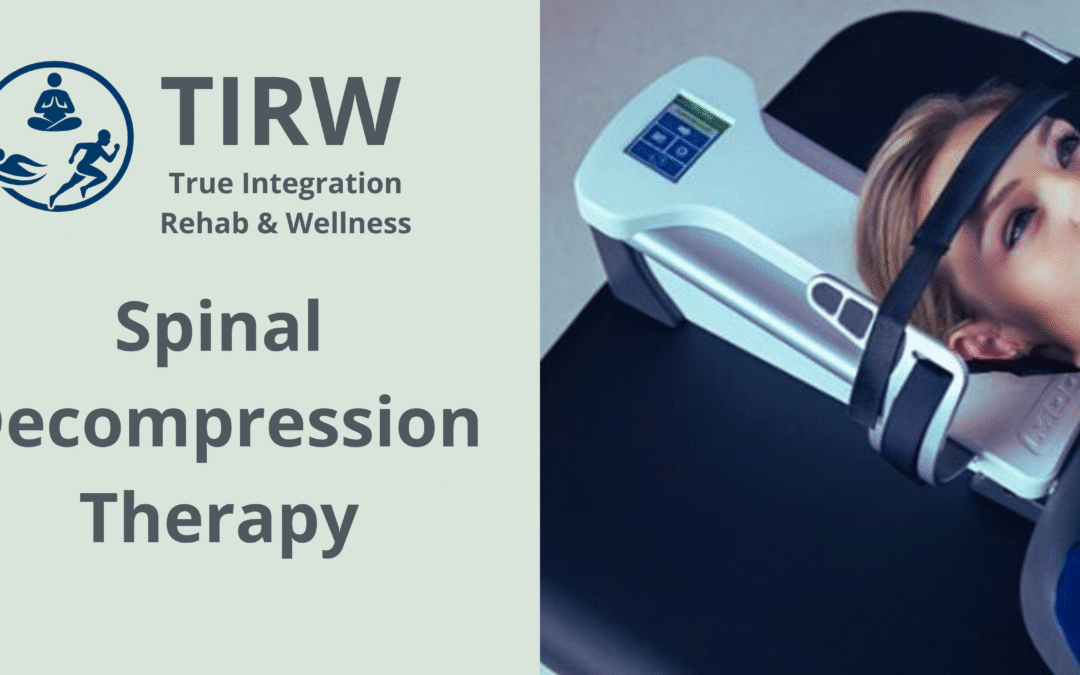
Spinal decompression therapy is an advanced, non-surgical approach designed to relieve pressure on spinal discs and nerves. At True Integration Rehab and Wellness (TIRW), we integrate ModPod Cervical Decompression technology with evidence-based manual therapy and corrective movement retraining. This comprehensive process doesn’t just reduce pain, it restores your body’s structural balance, neuromuscular control, and mobility.
Please note: TIRW currently offers cervical decompression therapy for neck and upper back concerns. Lumbar (lower back) decompression is not currently available.
What Is Spinal Decompression Therapy?
Spinal decompression gently reduces disc pressure by creating controlled, intermittent traction along the spine. The ModPod Cervical Decompression System uses precise, computer-calibrated tension to promote hydration and nutrient exchange in the cervical discs, helping restore disc height and function.
Unlike traditional traction, decompression therapy dynamically adapts to your body’s feedback, reducing muscle guarding and activating neural relaxation responses through feedback-controlled cycles.
Clinical distinction:
- Traction: Constant linear pull
Decompression: Cyclic, graded, feedback-controlled pressure modulation
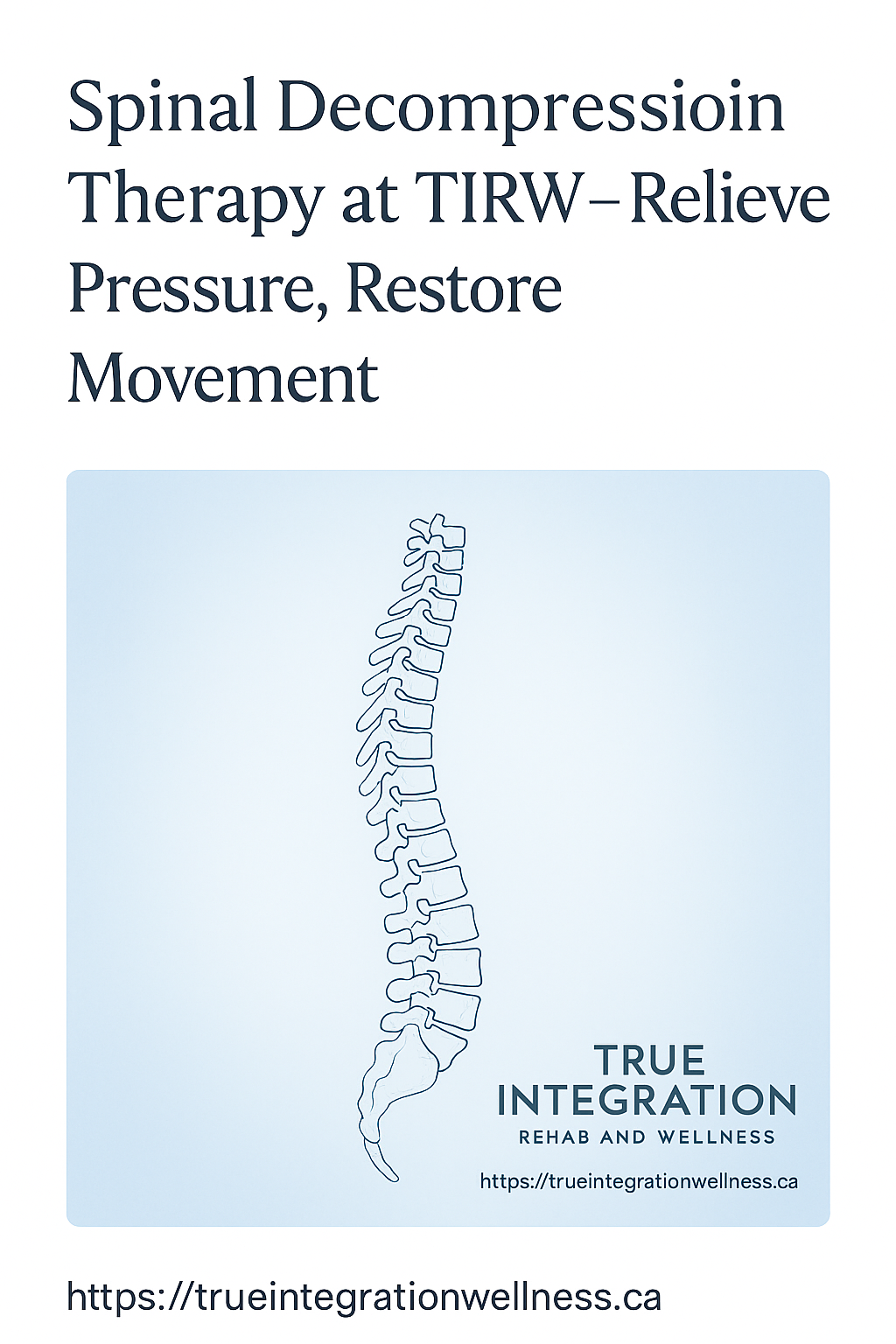
Mechanisms of Action
- Disc Rehydration: Creates negative intradiscal pressure to enhance fluid and nutrient diffusion.
- Neural Mobility: Reduces nerve root compression and improves neural conductivity.
- Mechanotransduction: Gentle oscillations stimulate fibroblast activity and collagen repair.
Autonomic Regulation: Restores balance between sympathetic (tension) and parasympathetic (relaxation) tone.
Integrative Application at TIRW
At TIRW, decompression therapy is not a stand-alone treatment, it’s part of a complete integrative rehabilitation protocol involving:
- Soft Tissue Integration: Myofascial release, Active Release Techniques (ART), and Graston-inspired manual therapy.
- Neurodynamics: Mobilization of cervical and upper extremity nerve tracts.
- Corrective Movement: Retraining deep stabilizers, breath mechanics, and posture.
- Postural Alignment Therapy: Clinical sequencing to restore balance and long-term function.
This layered approach reflects best practices in spinal rehabilitation as outlined by research from The Journal of Orthopaedic & Sports Physical Therapy and Spine Journal.
Evidence & Clinical Research
Recent studies show that decompression therapy can:
- Improve pain and mobility in cervical and lumbar disc herniation (Cleveland Clinic, 2023)
- Reduce intradiscal pressure and neural irritation (Spine-Health, 2022)
- Enhance disc hydration and function in degenerative conditions (PubMed, 2023)
At TIRW, the ModPod Cervical Decompression System is used within clinically monitored parameters aligned with international research standards.
Contraindications
Spinal decompression is not recommended for:
- Spinal instability or fracture
- Severe osteoporosis
- Post-surgical spinal fusion
- Pregnancy or abdominal aortic aneurysm
All patients undergo a clinical assessment and screening before treatment.
The TIRW Difference
At True Integration Rehab and Wellness, spinal decompression therapy with the ModPod Cervical Decompression System is:
- Personalized: Tailored to your spinal mechanics and clinical presentation.
- Collaborative: Managed by chiropractors, RMTs, and movement specialists.
- Gentle yet Effective: Focused on alignment and neuromuscular restoration.
- Evidence-Aligned: Rooted in biomechanics, fascia science, and neuroscience.
“We don’t just decompress the spine, we restore the body’s natural rhythm of movement and recovery.”
FAQs
- How many sessions are typically needed?
Most clients experience improvement within 4–6 sessions. Chronic or complex cases may require 8–12 sessions. - Is decompression painful?
No. The ModPod system applies gentle, calibrated tension—patients often feel lightness or relief afterward. - Can I combine decompression with other therapies?
Yes. It’s commonly paired with soft tissue therapy, chiropractic mobilization, or corrective exercise. - What’s the difference between decompression and traction?
Traction is static; decompression uses real-time feedback control to optimize disc recovery and reduce neural tension.
Learn More
Internal Links:
External References:
- Cleveland Clinic – Spinal Decompression Therapy
- Spine-Health – Clinical Effectiveness of Decompression Therapy
- PubMed – Mechanotransduction in Disc Recovery (2023)
Restore movement. Relieve pressure. Reconnect with your body.
Book your consultation today for ModPod Cervical Decompression Therapy at