
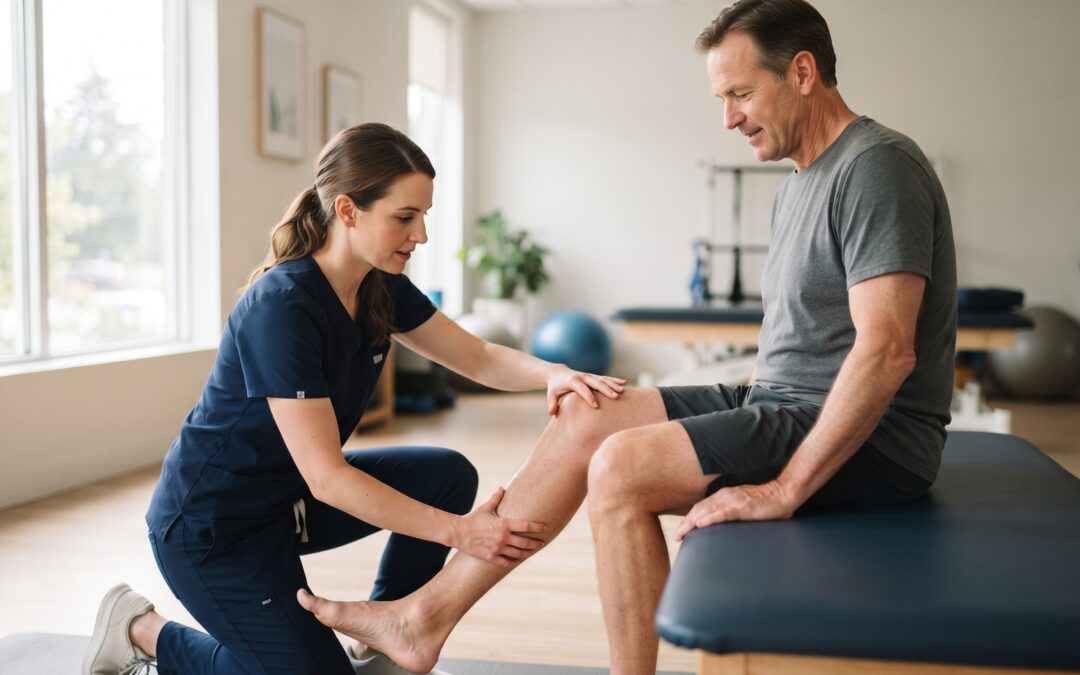
Why your knee may hurt below the joint, how surrounding body regions influence movement, and how a whole-body rehabilitation approach can support recovery.
The Hook: Is Your Inner Knee Pain Coming From More Than Your Knee?
Does the inside of your knee hurt when climbing stairs, getting up from a chair, or walking after sitting for a while?
Sometimes, the source of that discomfort is not the main knee joint itself. A small cushioning structure located just below the inner knee can become irritated, producing a condition known as pes anserine bursitis.
However, understanding knee pain means looking beyond the painful spot.
Your feet and ankles provide the foundation for movement. Your knees transfer forces, while your hips and pelvis help control alignment and stability. When one region is not moving or functioning comfortably, other regions may compensate.
At True Integration, we believe that understanding how these regions work together is an important part of personalized rehabilitation.
Executive Summary
Pes anserine bursitis is irritation or inflammation of the bursa located on the inner side of the upper shinbone, just below the knee joint.
It commonly produces:
- Tenderness on the inner knee, below the joint line.
- Pain when climbing stairs or exercising.
- Discomfort when getting up from a chair.
- Stiffness after prolonged sitting.
- Localized swelling or tenderness.
Repetitive activity, increased training demands, hamstring tightness, knee osteoarthritis, and certain lower-limb alignment patterns may contribute.
An effective rehabilitation approach considers the knee alongside the hips, pelvis, ankles and feet. The objective is to understand the factors contributing to discomfort, restore comfortable movement and support a gradual return to everyday activities.
Purpose and Scope
This article explains the anatomy, symptoms, contributing factors, and rehabilitation considerations associated with pes anserine bursitis.
It also explores how different body regions influence lower-limb movement.
It is educational information, not a diagnosis or substitute for an individual clinical assessment.
1. What Is Pes Anserine Bursitis?
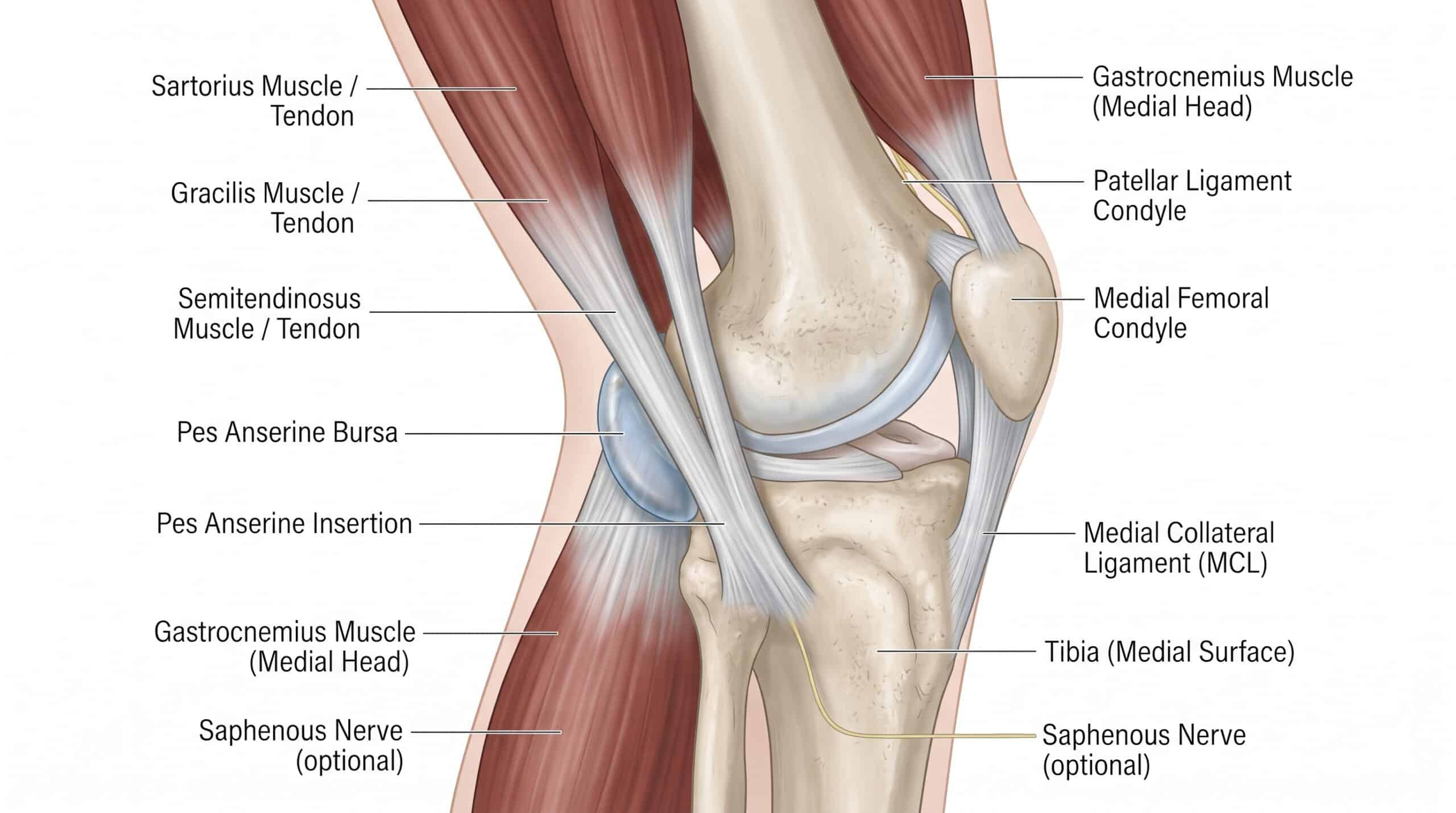
The word pes anserinus means goose’s foot. It describes the meeting point of three tendons on the inner portion of the upper shinbone.
These tendons belong to three muscles:
- Sartorius: Helps move the hip and bend the knee.
- Gracilis: Assists with bringing the thigh inward and bending the knee.
- Semitendinosus: Part of the hamstring group, helping bend the knee and extend the hip.
A small fluid-filled sac, called the pes anserine bursa, sits between these tendons and the underlying bone and nearby tissues.
Its job is to reduce friction during movement.
When this bursa becomes irritated, it can produce localized pain and tenderness. This is known as pes anserine bursitis.
Unlike some other knee conditions, the discomfort is typically felt slightly below the inner knee joint rather than directly along the joint line.
This distinction matters because several conditions can produce similar symptoms.
2. Why Does the Inner Knee Become Painful?
Pes anserine bursitis can develop when repetitive friction, pressure or mechanical stress irritates the bursa.
Several factors may contribute.
Repetitive activity
Running, cycling, swimming, sports involving sudden direction changes and repeated stair climbing can increase demands on the inner knee.
Hamstring tightness
The hamstrings connect the pelvis to the lower leg. Restricted flexibility or increased tension may influence how forces are distributed around the knee.
Sudden changes in exercise
Increasing running distance, training intensity or hill workouts too quickly may overload tissues that have not adapted to the new demands.
Foot and knee alignment
Flat feet, overpronation and knock-knee alignment can influence lower-limb mechanics. These patterns do not automatically cause bursitis, but they may be relevant when evaluating an individual’s movement.
Other health considerations
Knee osteoarthritis, excess body weight, and metabolic conditions such as type 2 diabetes are associated with increased risk.
Importantly, not every person with these factors develops bursitis. Individual assessment is necessary to understand which factors matter in each case.
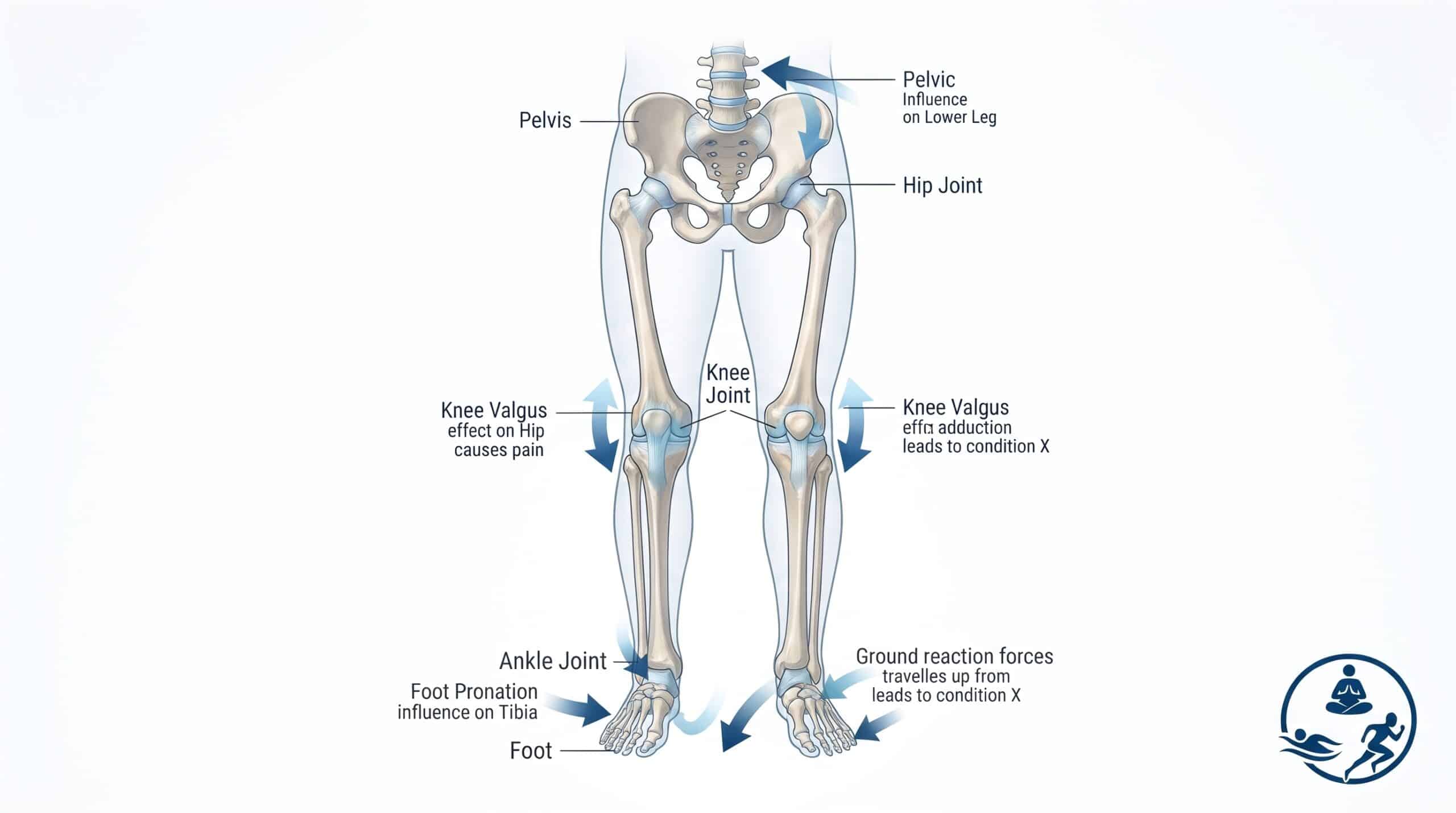
3. How the Feet, Ankles, Knees, Hips and Pelvis Work Together
The Whole-Body Connection
Your lower body works as a connected movement system.
A change in one region may influence how another region moves or handles physical demands. This does not mean that every knee problem begins in the feet or hips. It means that assessing the surrounding regions can provide useful information.
Feet: The foundation
Your feet provide support and help adapt to different surfaces.
- Limited foot mobility may influence walking mechanics.
- Excessive or poorly controlled foot motion may alter how the lower leg moves.
- Foot discomfort may change how you distribute your weight.
Ankles: Mobility and stability
The ankles help your body move forward during walking, climbing stairs and squatting.
Restricted ankle mobility may encourage compensatory movement at the knee or hip.
Knees: Force transfer and control
The knees transfer forces between the upper and lower legs.
They need sufficient strength, mobility and muscular coordination to manage everyday activities.
Hips: Movement and muscular support
The hip muscles help control the position of the thigh during walking, running and single-leg activities.
Reduced strength or coordination may affect how the knee moves during these activities.
Pelvis: The connection above
The pelvis provides the foundation for hip movement and supports the relationship between the trunk and lower limbs.
Changes in pelvic movement or control may influence how an individual performs weight-bearing activities.
The important connection: When one region is not functioning comfortably, other regions may compensate. Over time, these adaptations can change how the knee experiences everyday movement demands.
A thorough rehabilitation assessment therefore considers the entire lower-limb movement pattern rather than focusing exclusively on the painful area.
4. Common Symptoms and How Is Pes Anserine Bursitis Diagnosed?
Common symptoms include:
- Pain on the inner side of the knee, approximately 2–3 inches below the joint.
- Local tenderness when pressing the affected area.
- Discomfort during stair climbing.
- Pain when standing up from a seated position.
- Symptoms following repetitive exercise.
- Occasional localized swelling.
Symptoms can develop gradually and may become more noticeable with activity.
What else could cause medial knee pain?
Not all inner knee pain is bursitis.
Other possible causes include:
- Medial meniscus injury.
- Medial collateral ligament (MCL) injury.
- Knee osteoarthritis.
- Tendon irritation.
- Proximal tibial stress injury.
- Other conditions affecting the surrounding soft tissues.
A healthcare professional may review your activity history, assess the painful area and examine knee mobility, strength, and movement.
Imaging is not always necessary. Depending on the findings, ultrasound, X-rays or MRI may be considered to investigate alternative or additional conditions.
A scan alone does not necessarily establish the cause of symptoms.
5. How Rehabilitation Can Help
The Solution: Assess, Understand, Rehabiliate
Most cases are initially managed without surgery. Treatment depends on symptom severity, the underlying contributing factors and the individual’s overall health.
At True Integration, the clinic’s published physical rehabilitation approach combines hands-on care, functional recovery strategies and appropriate treatment technologies.
A rehabilitation programme may involve the following elements, depending on individual assessment.
1. Reduce aggravating activities
Temporarily modifying activities that repeatedly aggravate the knee can help reduce irritation.
This may mean adjusting running volume, limiting painful stair repetitions or modifying exercise intensity.
2. Restore comfortable flexibility
A clinician may identify restrictions involving the hamstrings, quadriceps, hip muscles or calf muscles.
Appropriate mobility and stretching exercises can then be introduced according to tolerance.
3. Improve strength and movement control
Progressive exercises may target:
- Quadriceps strength.
- Hamstring function.
- Hip abductor and extensor strength.
- Gluteal muscle coordination.
- Lower-limb balance and control.
The goal is to improve the body’s ability to manage daily movement demands.
4. Assess foot and ankle mechanics
If foot positioning, ankle mobility or walking mechanics are relevant, they may be incorporated into the rehabilitation programme.
5. Use appropriate supportive therapies
True Integration’s published physical rehabilitation services describe a personalized approach combining hands-on techniques with available modalities, including therapeutic ultrasound and electrical stimulation.
These treatments should be selected according to clinical findings and individual needs. No single machine or passive treatment replaces an appropriate exercise and rehabilitation programme.
6. Progress towards normal activities
As symptoms improve, activities can gradually become more demanding.
The objective is to help you return to walking, climbing stairs, exercising and participating in the activities that matter to you.
Your Title Goes Here
6. When Should You Seek Professional Attention?
Persistent inner knee pain deserves proper assessment, especially when it interferes with walking, exercise, or everyday activities.
Seek prompt medical attention if you experience:
- A hot, red, and significantly swollen knee, particularly with fever.
- Severe pain following an injury.
- Inability to bear weight.
- Significant instability or inability to move the knee.
- Sudden swelling or rapidly worsening symptoms.
These symptoms may indicate a condition requiring medical investigation rather than routine rehabilitation alone.
7. Frequently Asked Questions About Pes Anserine Bursitis
- What is the main symptom of pes anserine bursitis?
The most characteristic symptom is tenderness on the inner side of the upper shinbone, approximately 2-3 inches below the knee joint. Pain may increase with stair climbing, exercise, or standing from a chair. - Is pes anserine bursitis the same as a meniscus tear?
No. Pes anserine bursitis affects a small cushioning sac outside the knee joint. A meniscus tear affects the cartilage inside the knee joint. Both can produce medial knee pain, so clinical assessment is important. - Can tight hamstrings cause inner knee pain?
Hamstring tightness may contribute to increased tension around the pes anserine region. However, tight hamstrings do not automatically mean that bursitis is present. - Can flat feet contribute to knee pain?
Flat feet and excessive foot pronation may influence lower-limb mechanics. Their relevance depends on the individual’s walking pattern, symptoms, and overall movement assessment. - Does pes anserine bursitis require surgery?
Most cases are treated conservatively. Activity modification, appropriate rehabilitation and symptom management are generally considered first. Surgery is rarely necessary. - How long does pes anserine bursitis take to improve?
Recovery varies according to symptom duration, contributing factors, activity demands and treatment response. There is no single recovery timeline that applies to everyone. - Can I continue walking with pes anserine bursitis?
Gentle walking may be appropriate if it does not significantly aggravate symptoms. Reduce the intensity or duration if pain increases, and seek an assessment if discomfort persists. - What exercises help pes anserine bursitis?
Depending on the assessment, rehabilitation may include gentle hamstring mobility, quadriceps strengthening, hip strengthening, balance exercises and progressive functional movements. Exercises should be tailored to your symptoms. - Can pes anserine bursitis return?Symptoms can recur if the factors contributing to irritation remain. Gradual activity progression, appropriate strengthening and attention to movement mechanics may help reduce the likelihood of recurrence.
- Where can I get knee rehabilitation in Markham?
True Integration, Rehabilitation and Wellness Clinic offers personalized physical rehabilitation services in Markham, Ontario. An initial assessment can help determine whether its services are appropriate for your concerns.
Conclusion: Look Beyond the Painful Spot
Pes anserine bursitis is a relatively overlooked cause of medial knee pain, but its symptoms can interfere with simple activities such as walking, climbing stairs, and getting out of a chair.
Understanding the condition means understanding more than the bursa itself.
The feet, ankles, knees, hips and pelvis work together to support movement. When one region is restricted, weak, or adapting to increased demands, other regions may compensate.
That is why a thoughtful rehabilitation approach considers the whole movement system while addressing the specific source of discomfort.
If you are experiencing persistent inner knee pain, a professional assessment can help clarify what is happening and identify appropriate next steps.
Move better. Understand your body. Build a stronger foundation for recovery.
Internal References
Physical rehabilitation in Markham:
https://trueintegrationwellness.ca/physical-rehab
Explore our rehabilitation services:
https://trueintegrationwellness.ca/services
Contact our clinic:
https://trueintegrationwellness.ca/contact-us
More health and rehabilitation insights:
https://trueintegrationwellness.ca/blog
External References
- American Academy of Orthopaedic Surgeons (AAOS):
Pes Anserine (Knee Tendon) Bursitis
Supports anatomy, common symptoms, contributing factors and conservative treatment. - National Library of Medicine / StatPearls:
Pes Anserine Bursitis
Supports clinical assessment, differential diagnosis and rehabilitation considerations. NCBI Bookshelf) - Orthopedic Research and Reviews, October 2026:
Pes Anserine Bursitis: An Underrecognized Cause of Medial Knee Pain
A particularly relevant recent review discussing diagnostic challenges, associated conditions and evidence-based management. (PMC) - Orthopedic Research and Reviews, 2025:
Knee Bursae: A Comprehensive Review
Provides additional context about knee bursae, overlapping symptoms and imaging. (PMC)
CTA
Inner Knee Pain Affecting Your Daily Activities?
Persistent pain on the inside of your knee can make walking, climbing stairs, exercising, and everyday movement difficult. The first step is understanding what may be contributing to your symptoms.
At True Integration, Rehabilitation and Wellness Clinic in Markham, our physical rehabilitation approach combines assessment and individualized care.
Ready to Address Your Knee Pain?
If inner knee pain is limiting your movement, speak with our team about an individualized physical rehabilitation assessment.
Take the Next Step Toward Better Knee Function
You don’t have to ignore persistent inner knee pain or guess what is causing it. A professional assessment can help identify possible contributing factors and determine an appropriate next step.
Visit True Integration, Rehabilitation and Wellness Clinic:
3601 Highway 7 East, Suite 708, Markham, Ontario L3R 0M3