
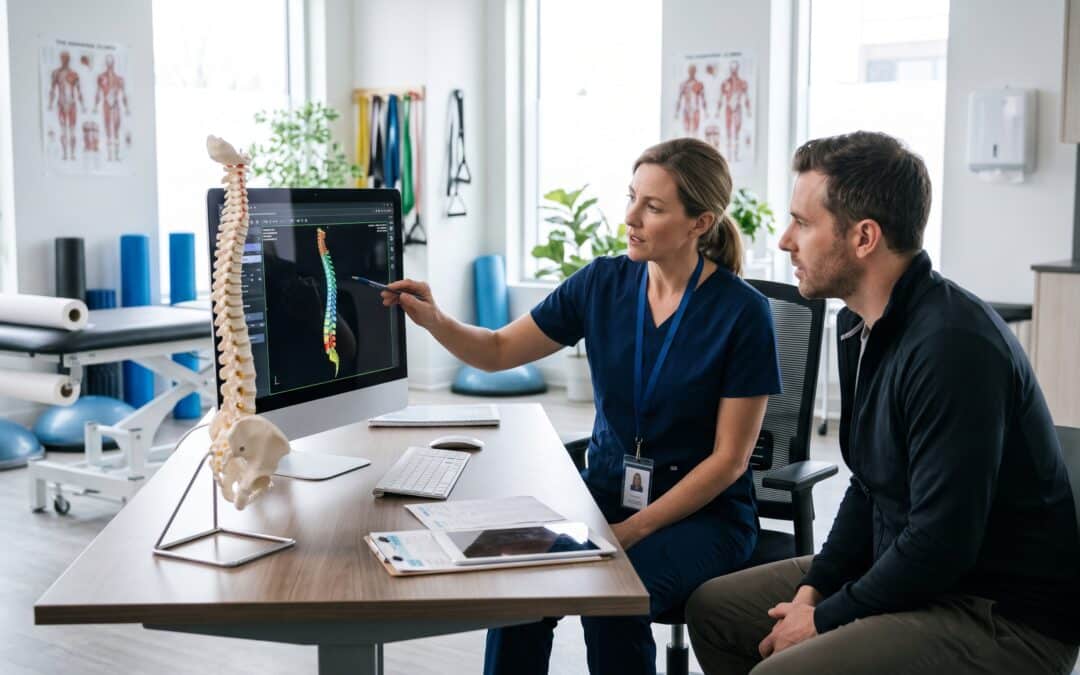
Executive Summary
Scoliosis is a complex, three-dimensional structural condition characterized by lateral curvature and vertebral rotation of the spine. While severe cases may require surgical evaluation, physical therapy serves as a primary conservative intervention.
By integrating Physiotherapy Specific Scoliosis Exercises (PSSE), targeted core mobilization, and asymmetrical neuromuscular re-education, patients can achieve significant postural improvement, pain reduction, and stabilization of curve progression.
Purpose and Scope
This management guide provides an evidence-based roadmap for individuals seeking non-surgical management of scoliosis. It explores biomechanical principles, standardized physiotherapy interventions, and localized clinical solutions available at True Integration Wellness, located in Markham, Ontario.
Understanding Scoliosis & Non-Surgical Rehabilitation
Scoliosis is not merely a sideways curvature of the spine, it involves a complex 3D alteration affecting the sagittal, frontal, and transverse planes.
Traditional observational approaches (“wait and see”) often allow mild curves to progress. Modern conservative protocols prioritize early therapeutic intervention to improve functional mobility and maintain long-term spinal integrity.
Start With Assessment, Not Assumptions
Effective scoliosis rehabilitation begins with precise clinical diagnostics rather than generalized back exercises.
Radiographic Cobb Angle Analysis: Measuring the exact degree of lateral curvature.
Scoliometer Rib Hump Quantification: Assessing rotational deformation in the thoracic region.
Pelvic & Postural Alignment: Evaluating sagittal balance and pelvic tilt discrepancies.
Functional Movement & Neuromuscular Deficit Screening: Identifying asymmetric muscle recruitment patterns along the paraspinal columns.
The Core Mechanics: How Physiotherapy Treats Scoliosis
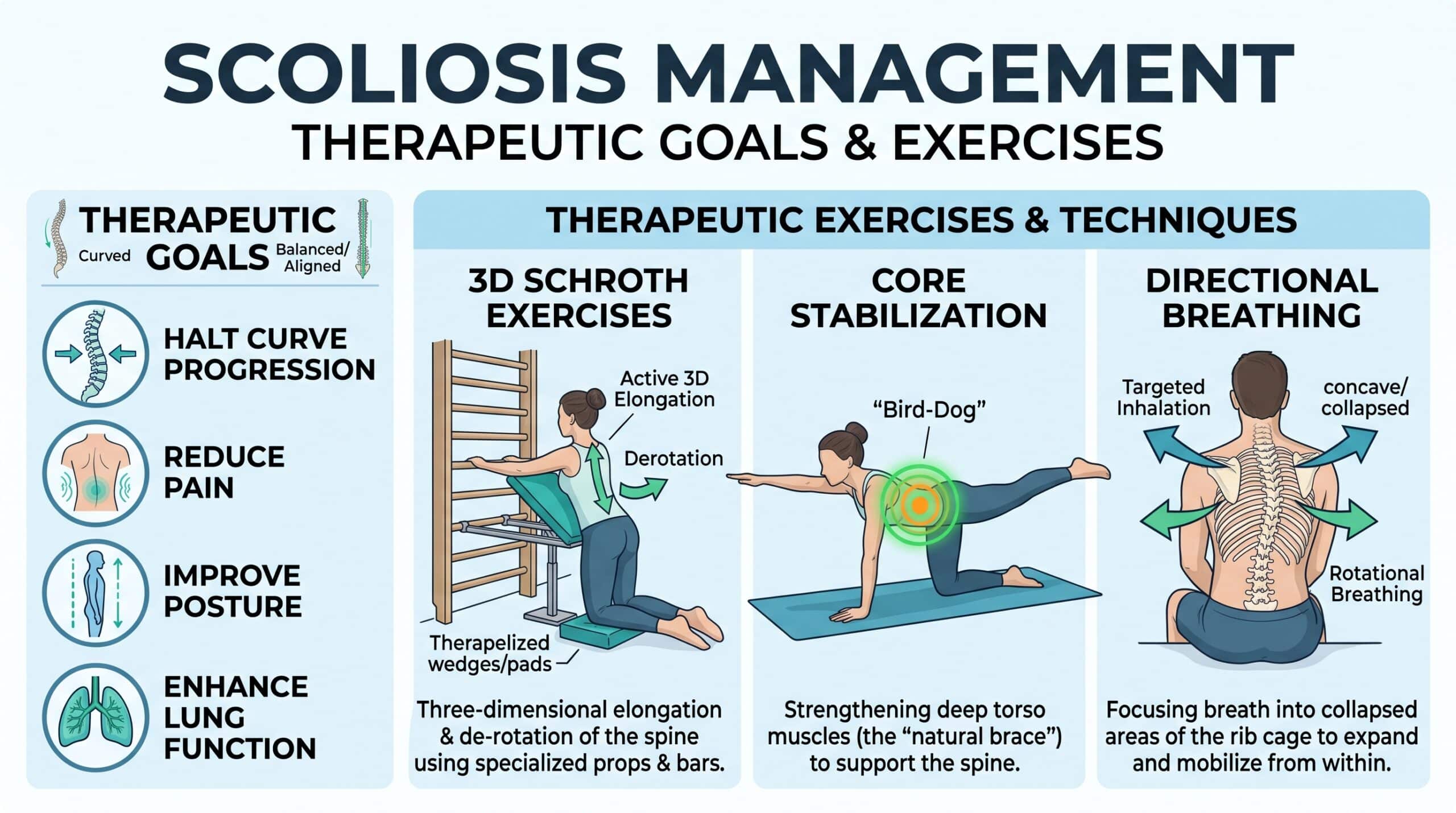
1. 3D Exercise Therapy & The Schroth Method
The Schroth Method is a specialized physical therapy protocol designed specifically for scoliosis. It utilizes tailored 3D exercises to de-rotate, elongate, and stabilize the spinal column.
- Elongation: Stretching concavities to restore height and reduce compression.
- De-rotation: Unwinding vertebral rotation to reduce rib prominence.
- Stabilization: Isometric contractions to hold corrected alignments in daily activities.
2. Core & Paraspinal Stabilization
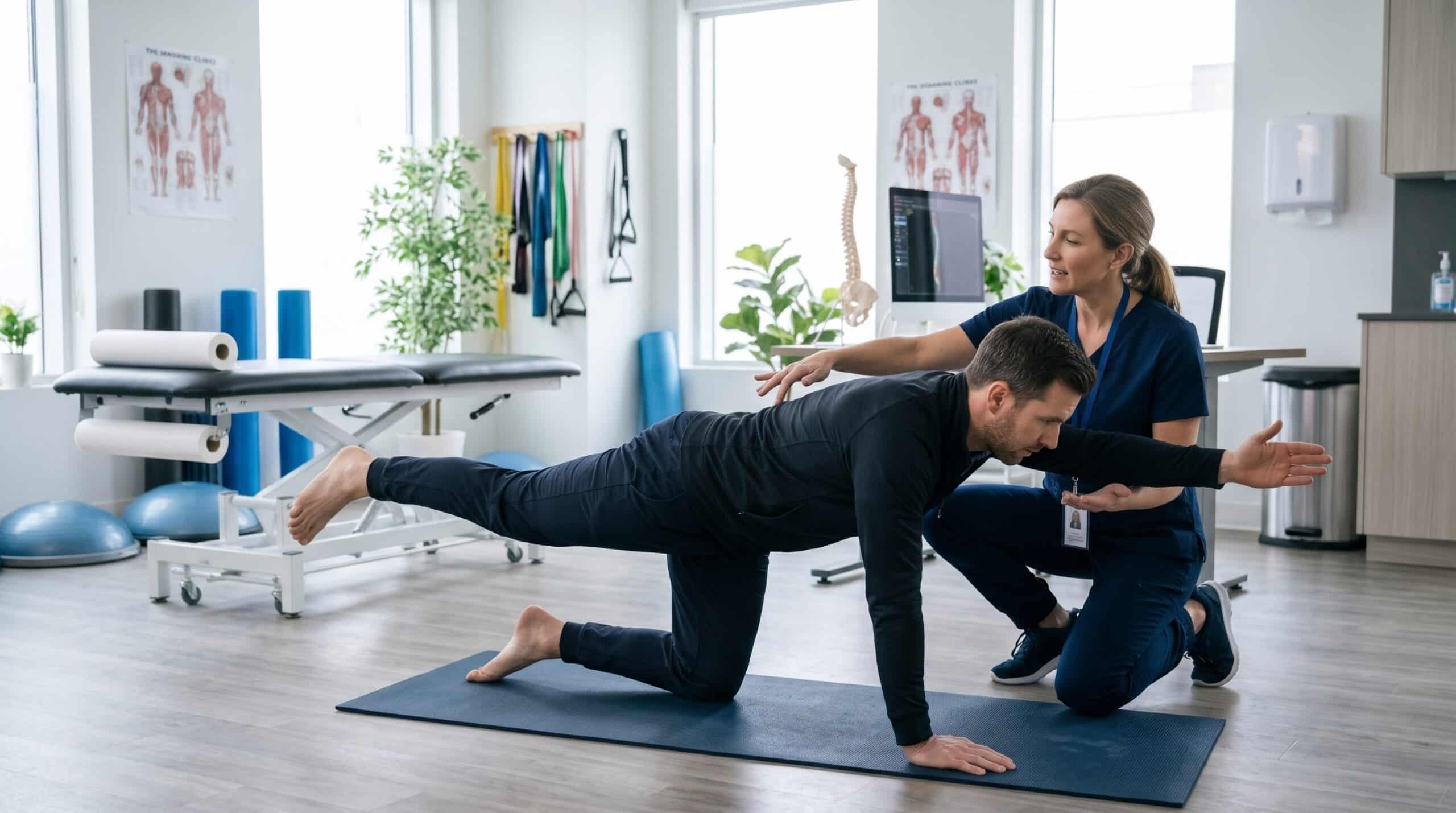
Unequal muscle tension creates an imbalance where muscles on the convex side become elongated and weak, while those on the concave side become hypertonic and tight.
Exercises like modified bird-dogs, dead bugs, and asymmetric side planks are tailored to restore balanced paraspinal recruitment.
3. Rotational Breathing & Thoracic Expansion
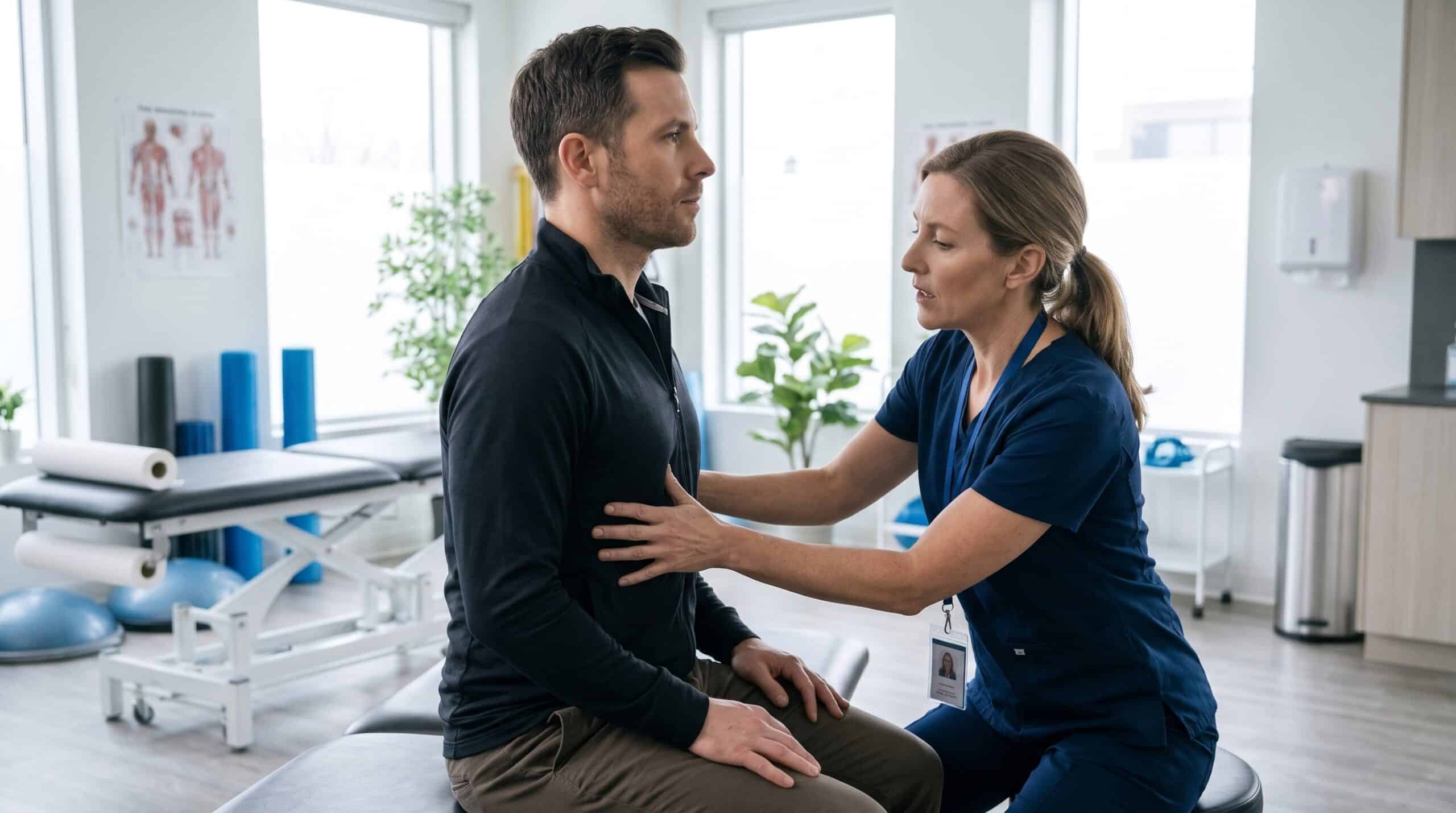
Spinal rotation distorts the rib cage, restricting pulmonary capacity on the concave side. Targeted directional/rotational breathing techniques direct inhaled air into collapsed lung sectors, helping expand thoracic concavities internally.
4. Manual Therapy & Soft Tissue Mobilization
Hands-on treatment reduces joint stiffness, releases tight fascial planes, and alleviates soft-tissue pain. Combined with active movement, manual therapy enhances spinal mobility and improves dynamic postural control.
Problem, Solution, Proof, Action Framework
- Problem: Unmanaged scoliosis can cause progressive asymmetry, postural imbalance, chronic stiffness, and reduced pulmonary efficiency.
- Solution: Structured, evidence-based physiotherapy tailored to your individual curve pattern (Cobb angle, thoracic vs. lumbar).
- Proof: Clinical trials recorded by the Society on Scoliosis Orthopaedic and Rehabilitation Treatment (SOSORT) demonstrate that Physiotherapy Specific Scoliosis Exercises (PSSE) significantly reduce curve progression rates and lower surgical rates.
- Action: Book a clinical spinal assessment at True Integration Wellness in Markham to map out your personalized conservative care plan.
Why Choose True Integration Wellness in Markham?
Located conveniently at 3601 Highway 7 East, Suite 708, Markham, Ontario, True Integration Wellness delivers structured, individualized rehabilitation. Our clinical approach pairs evidence-based physical therapy with one-on-one postural re-education to support patients across all stages of life.
Frequently Asked Questions (FAQs)
- Can physiotherapy completely straighten a scoliotic spine?
While physiotherapy may not fully reverse structural bony alignment in adults, it effectively halts progression, reduces curve severity in growing adolescents, corrects postural asymmetry, and relieves chronic back pain.
- Is physiotherapy safe for all scoliosis curve sizes?
Yes. Physiotherapy is customized to your specific curve type and Cobb angle. It works as a standalone treatment for mild-to-moderate curves and complements bracing or post-surgical recovery for larger curves.
- What is the difference between standard physical therapy and the Schroth Method?
Standard physical therapy focuses on general core strength and flexible posture. The Schroth Method is an advanced 3D curve-specific protocol that incorporates directional breathing and asymmetrical isometric strengthening targeted to your precise spinal rotation.
- How frequently should I attend physiotherapy sessions for scoliosis?
In the initial phase, 1 to 2 sessions per week are recommended to establish proper exercise form and breathing technique. Once independent, patients transition to home exercise regimens with periodic clinical check-ins.
- At what age should scoliosis physiotherapy begin?
Intervention can begin as soon as a curve is identified. Early detection in children and adolescents yields optimal outcomes for halting curve progression, while adults benefit from improved pain management, posture, and mobility.
- Can I do regular gym exercises if I have scoliosis?
Yes, but high-impact or asymmetrical loading exercises (like heavy overhead presses or unguided deadlifts) should be adapted. A qualified physiotherapist can modify your gym routine to ensure safely distributed axial loading.
- How long does it take to see visible improvements from physiotherapy?
Functional improvements in posture, mobility, and pain relief often occur within 6 to 12 weeks of consistent therapy. Halting curve progression is verified via periodic clinical measurements and follow-up X-rays over longer term monitoring.
Internal-Link Architecture
- True Integration Wellness: https://trueintegrationwellness.ca/
- Physical therapy: https://trueintegrationwellness.ca/physical-rehab/
- Book a clinical spinal assessment: https://trueintegrationwellness.ca/booking/
- Contact our team https://trueintegrationwellness.ca/contact-us/
External Authority Links
- SOSORT: https://sosort.org/
- Physiotherapy Specific Scoliosis Exercises (PSSE): https://pmc.ncbi.nlm.nih.gov/articles/PMC4973373/
- Schroth Method: https://www.hopkinsmedicine.org/health/conditions-and-diseases/scoliosis/schroth-method-for-scoliosis
Conclusion & Call to Action
Scoliosis does not have to dictate your movement, comfort, or quality of life. Structured physiotherapy provides a proactive, non-surgical path to managing spinal curvature and eliminating pain.
Take Control of Your Spinal Health Today.
Visit True Integration Wellness at 3601 Highway 7 East, Suite 708, Markham, Ontario, L3R 0M3 or contact our team to schedule your detailed scoliosis assessment.